
Tana Toraja: Where Death Takes Time
In Tana Toraja on Sulawesi, Indonesia, death is a long social transition. This photo story follows four days of Rambu Solo’, exploring family, ritual, buffaloes, Christian influence and the people who keep these traditions alive.
Traditional alang rice barns in Tana Toraja on the Indonesian island of Sulawesi.
The dead stay at home
The man inside the traditional house had died only a few weeks earlier. His body was carefully wrapped in layers of cloth and rested inside the house, where a faint sweet smell lingered in the air. Yet he had not fully left the social world of the living. Everyday family life continued around him.
A deceased family member inside a traditional Toraja house, wrapped in pineapple fibres and resting on bamboo poles.
According to Aluk Todolo, the ancestral belief system of the Toraja people, the deceased can remain part of the household until the appropriate funeral rites have taken place. During this time, they may be regarded as to makula’, sick rather than fully departed. Death is therefore not understood only as a biological moment, but as a longer social transition.
That transition is completed through Rambu Solo’. Over four days, we visited four different villages and witnessed different stages of these funeral ceremonies. What gradually became clear was that Rambu Solo’ is about much more than burial. It brings families together, makes obligations and relationships visible and eventually allows the deceased to leave the social world they had continued to be part of.
Understanding any of this would have been almost impossible without Meyske. Ika, as her friends and family call her, runs a homestay in a traditional Toraja village, works as a local guide and is part of the leadership team of the local guide association. Her family comes from Toraja, although she spent much of her life on Java before later returning to care for her grandmother.
Meyske is deeply committed to keeping Toraja traditions visible, understood and valued.
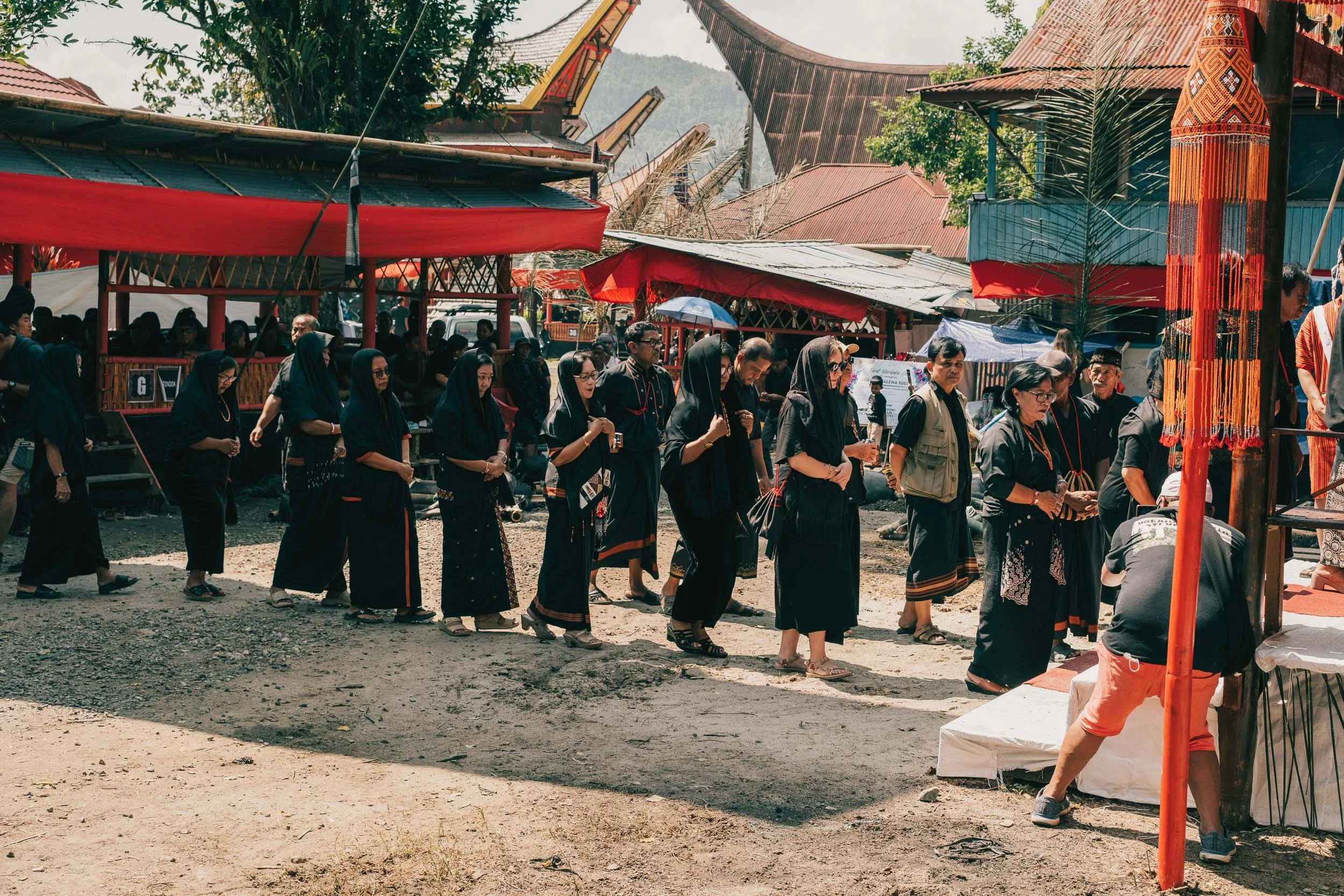
Meyske knew the traditions, but just as importantly, she knew the people. Information about ceremonies often came at short notice, plans changed frequently and motorcycles were essential for moving quickly between villages. She also made sure that we entered the funerals as respectful guests, dressed in black with a black sarong, contributing to the families and following her advice about what was appropriate.
Day 1: Raising the deceased
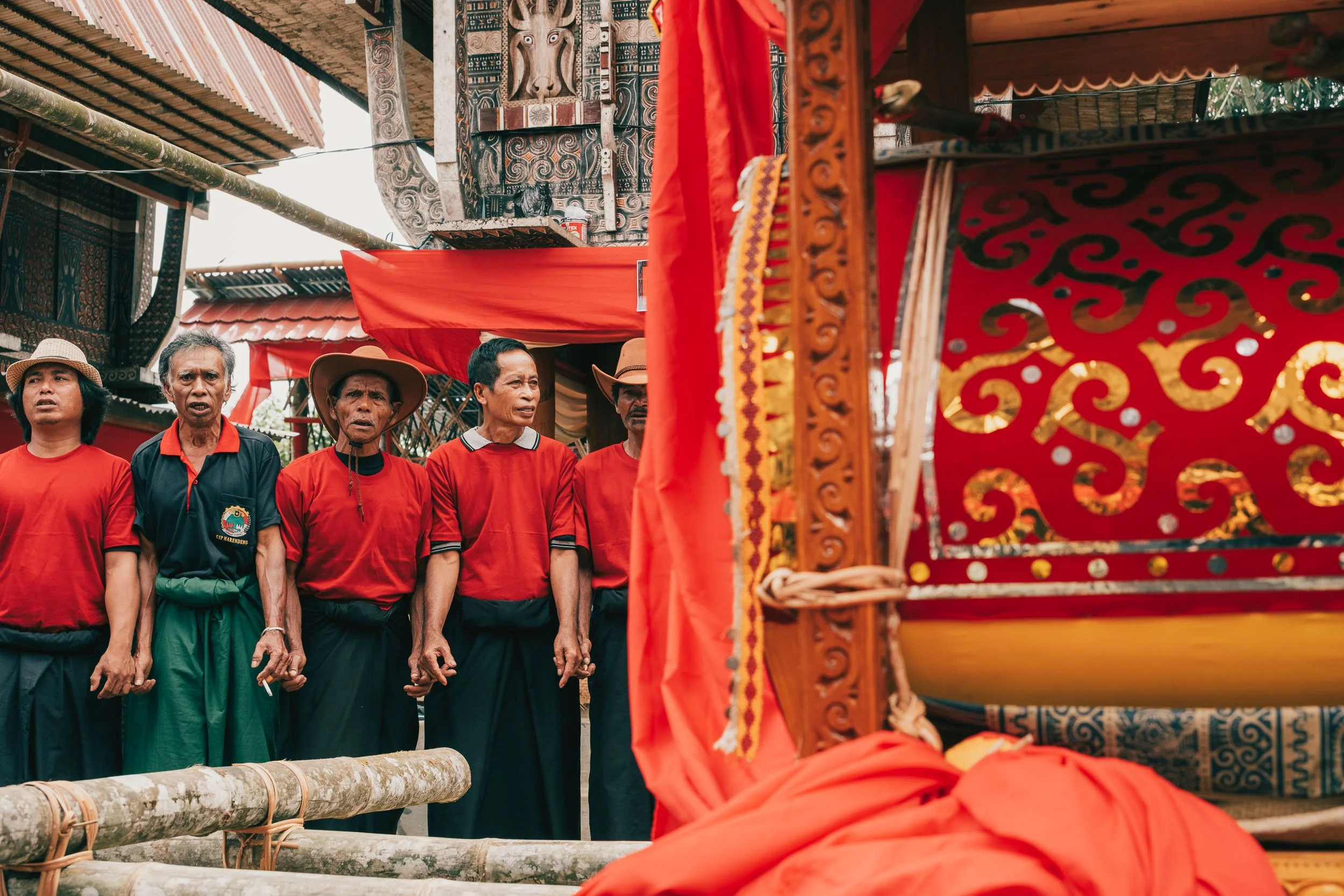
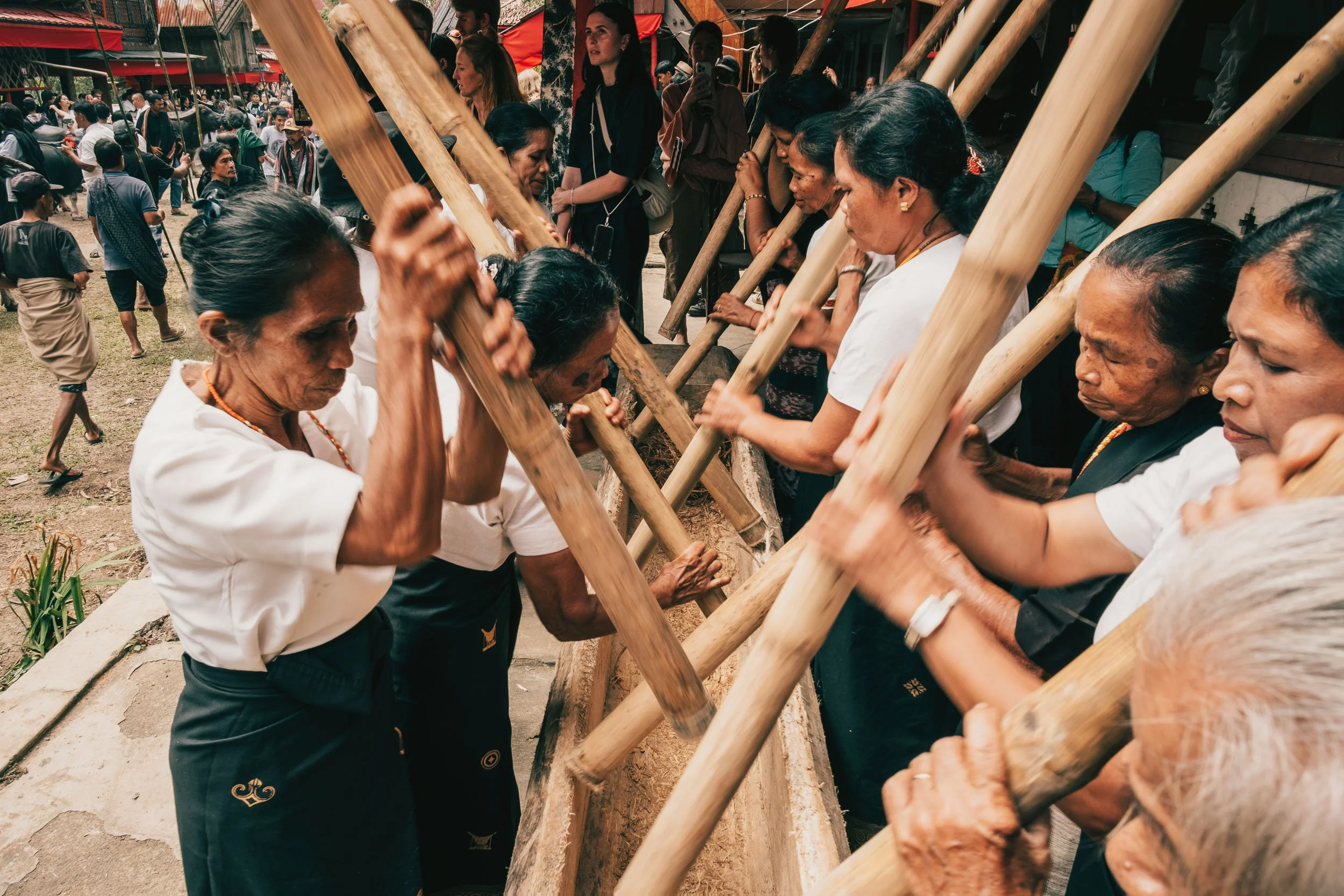
The first stage we witnessed began with rhythm. Women stood around a large wooden trough and struck long bamboo poles into it in a steady pattern, while close male relatives gathered around the deceased nearby and sang.
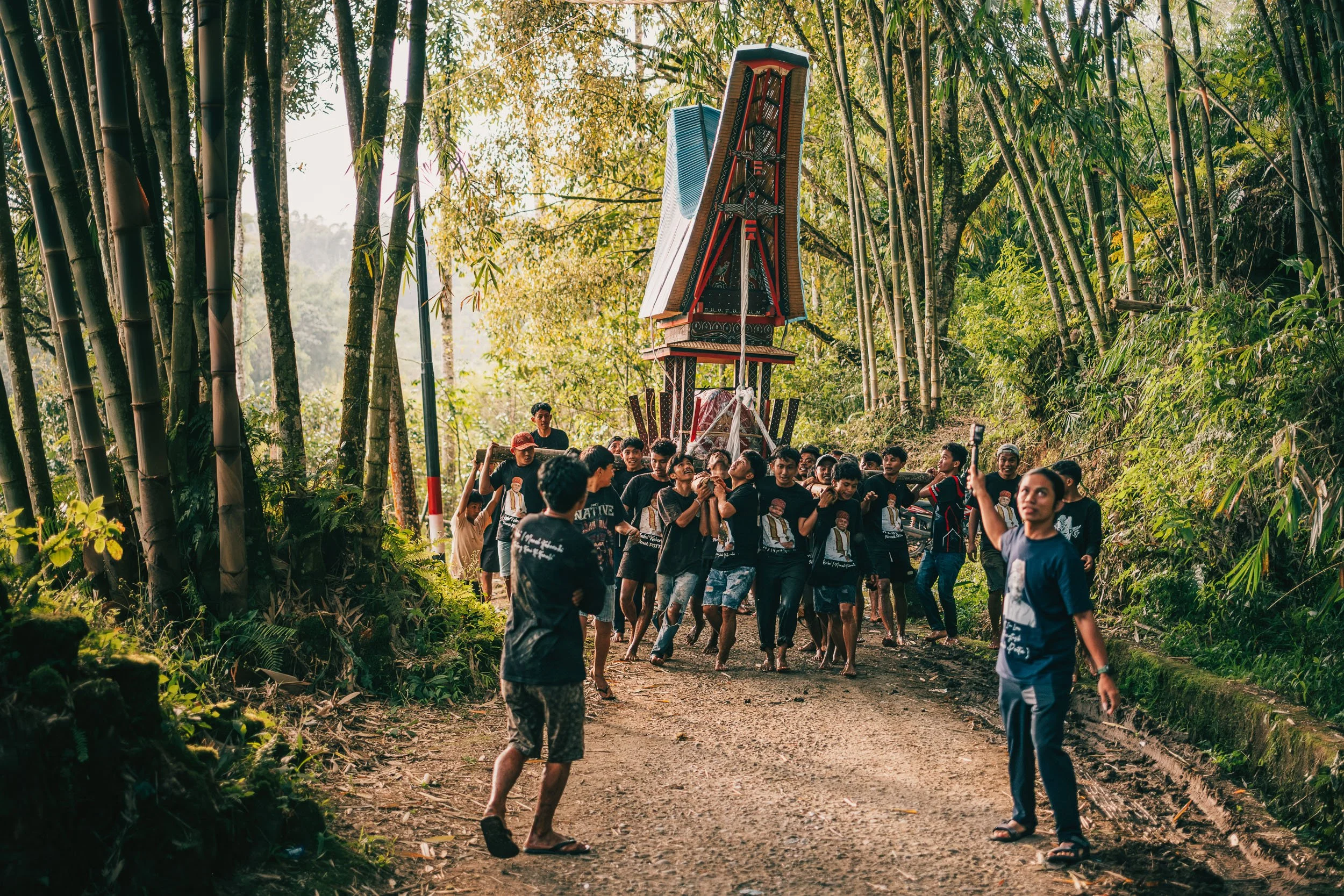
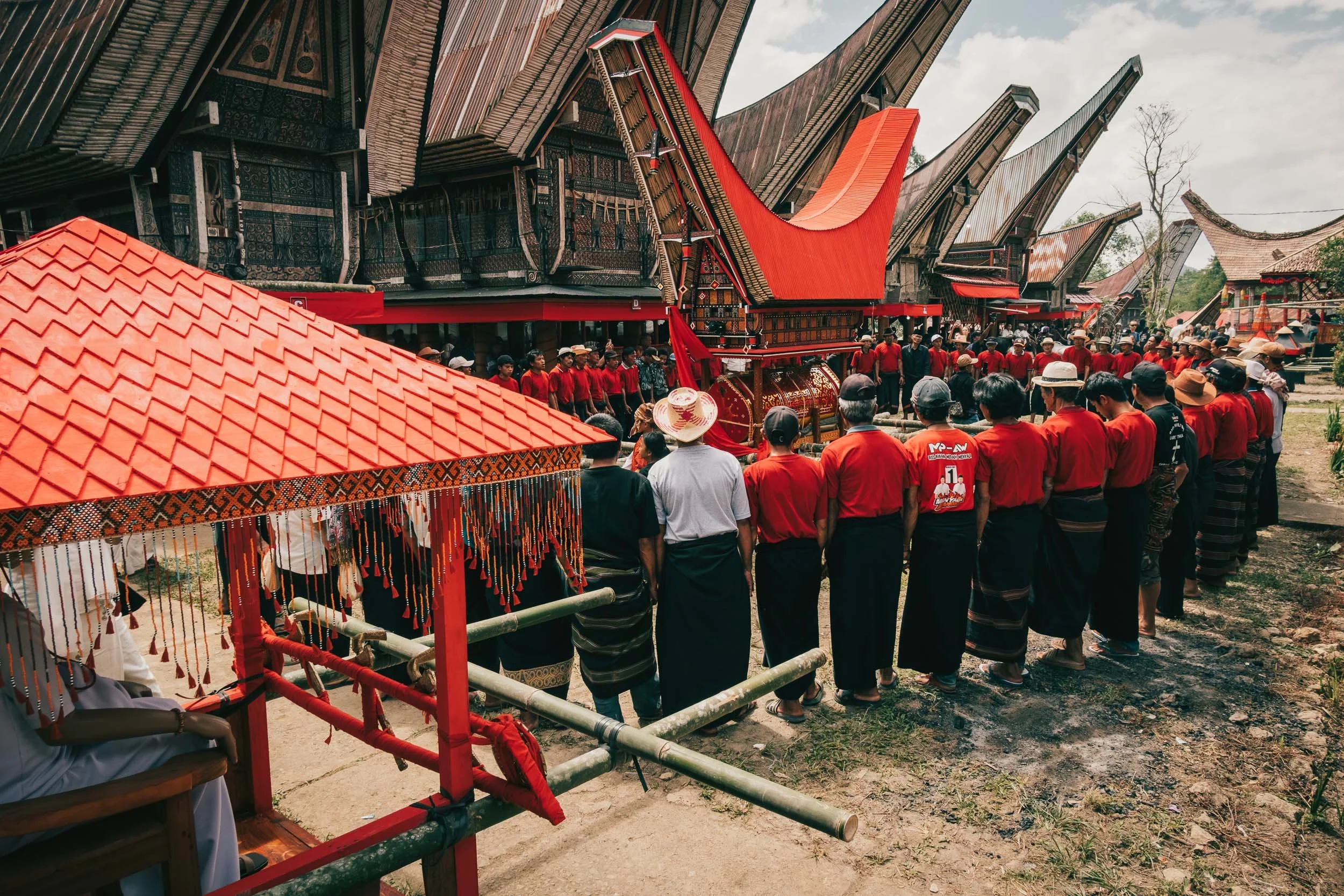
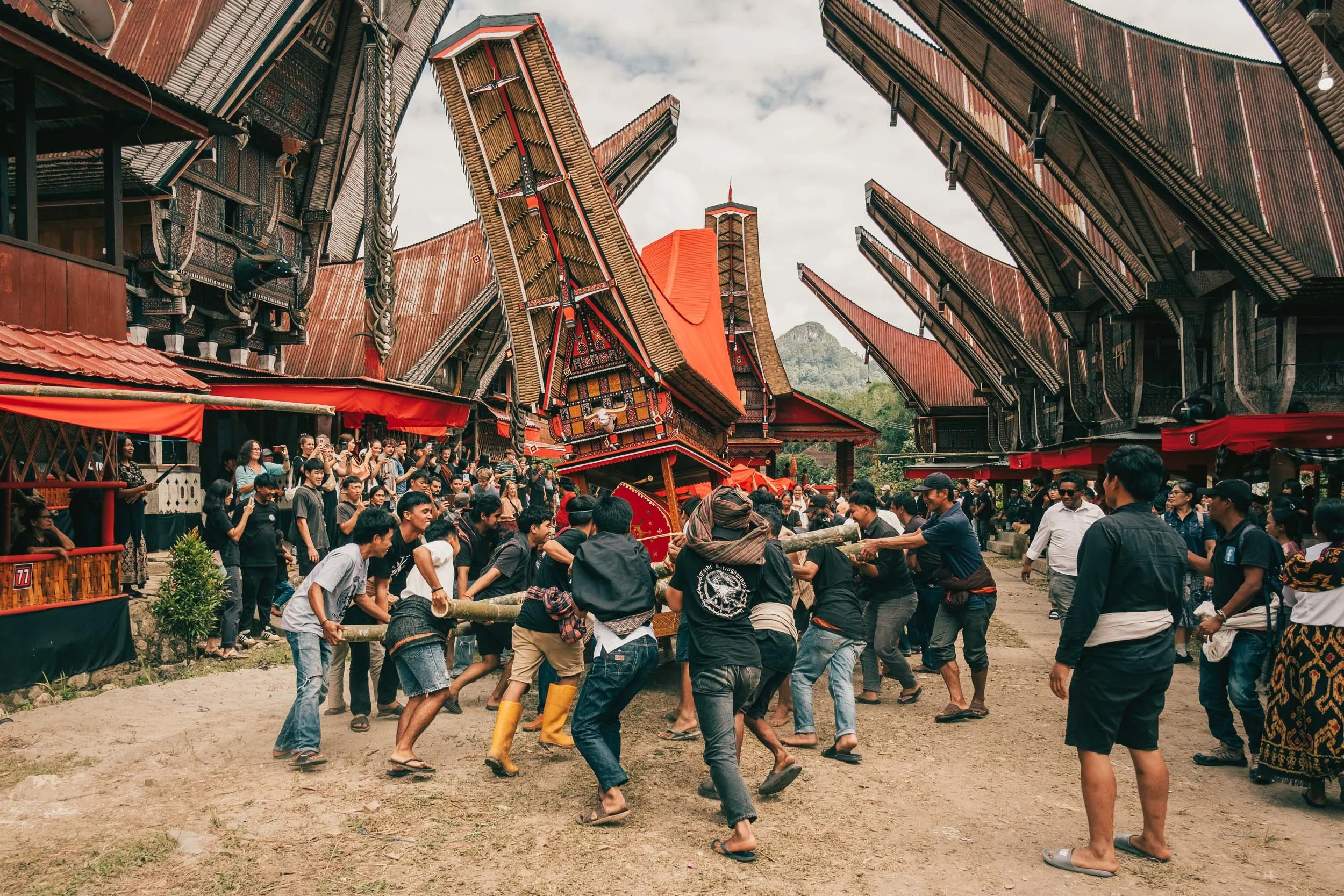
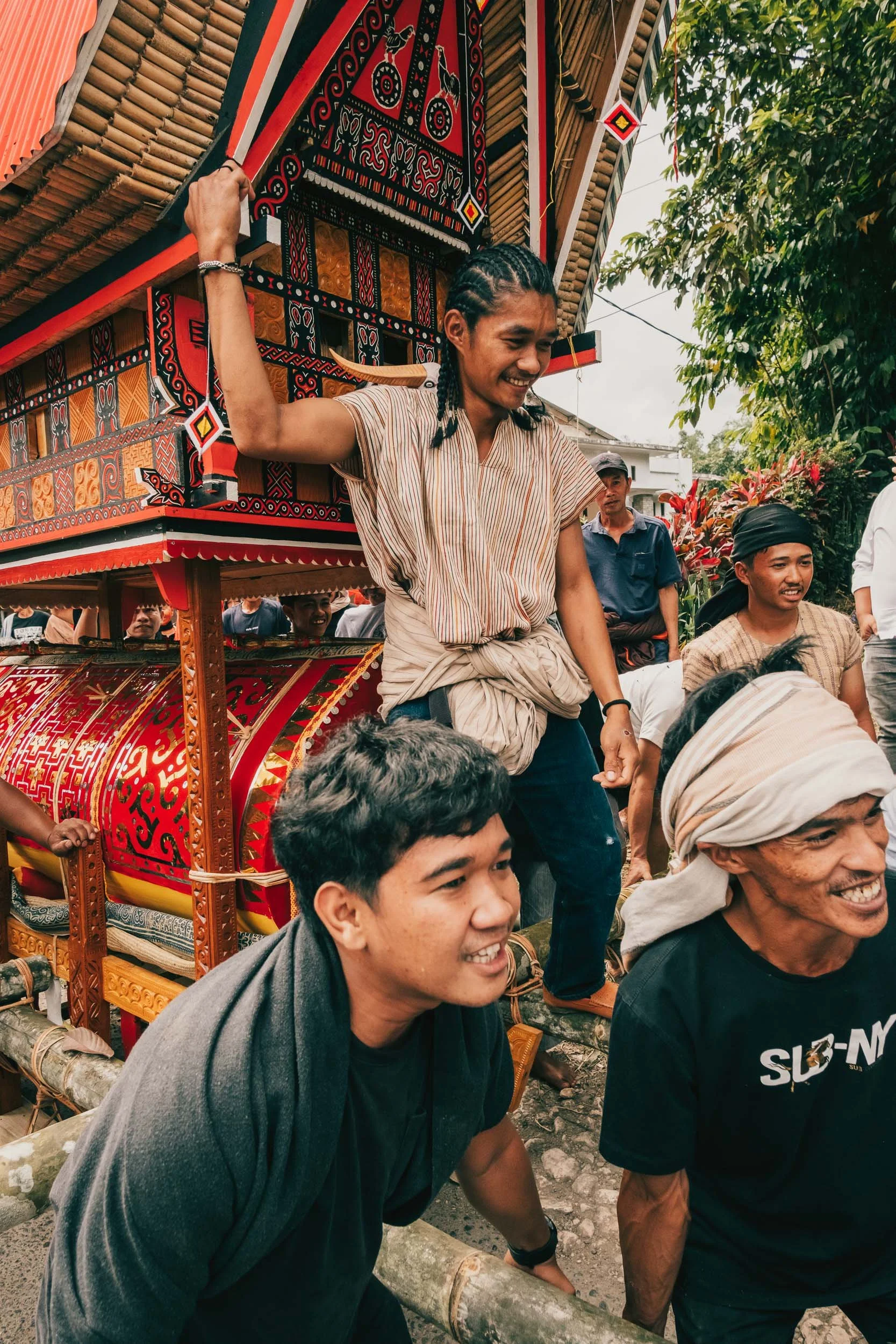
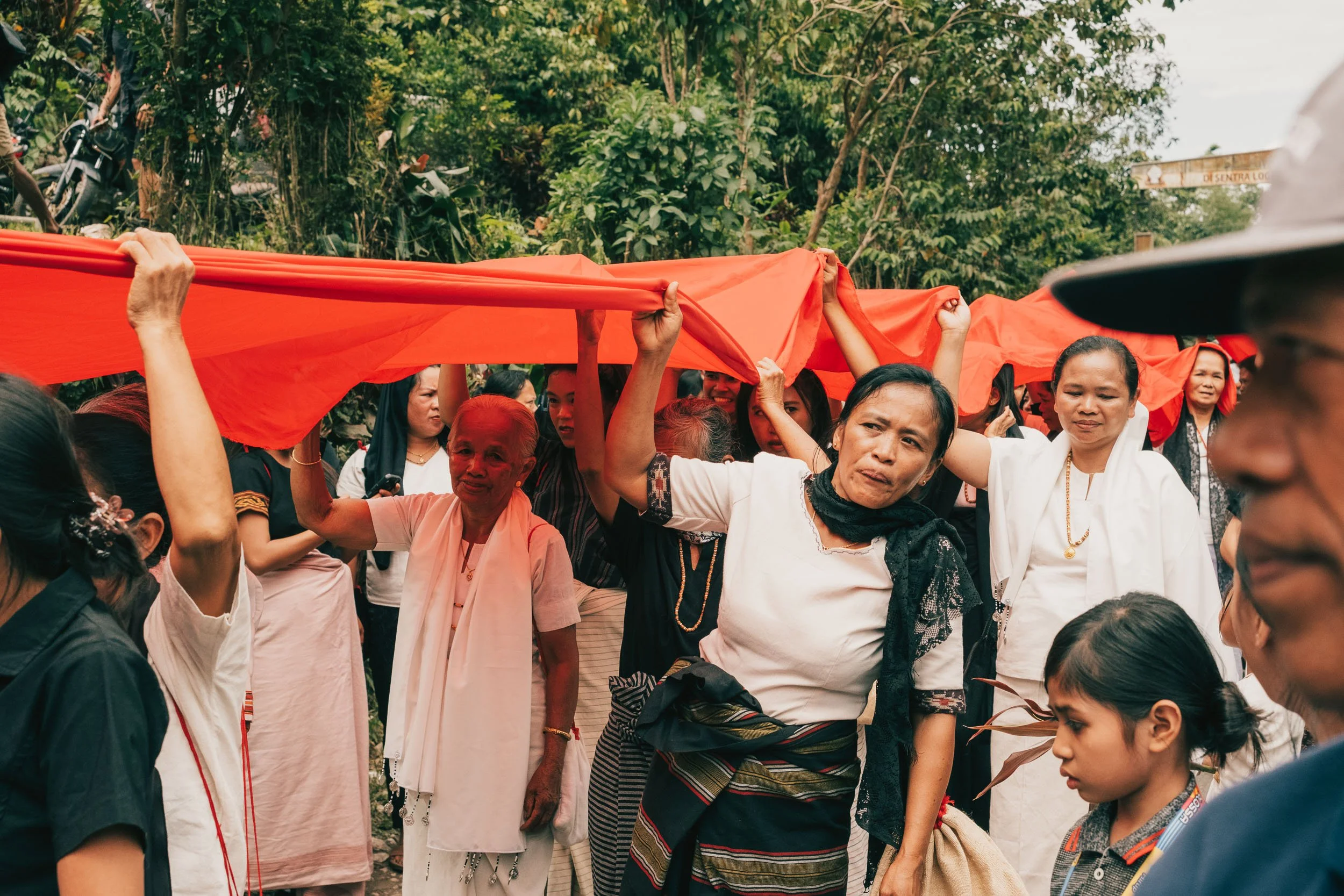
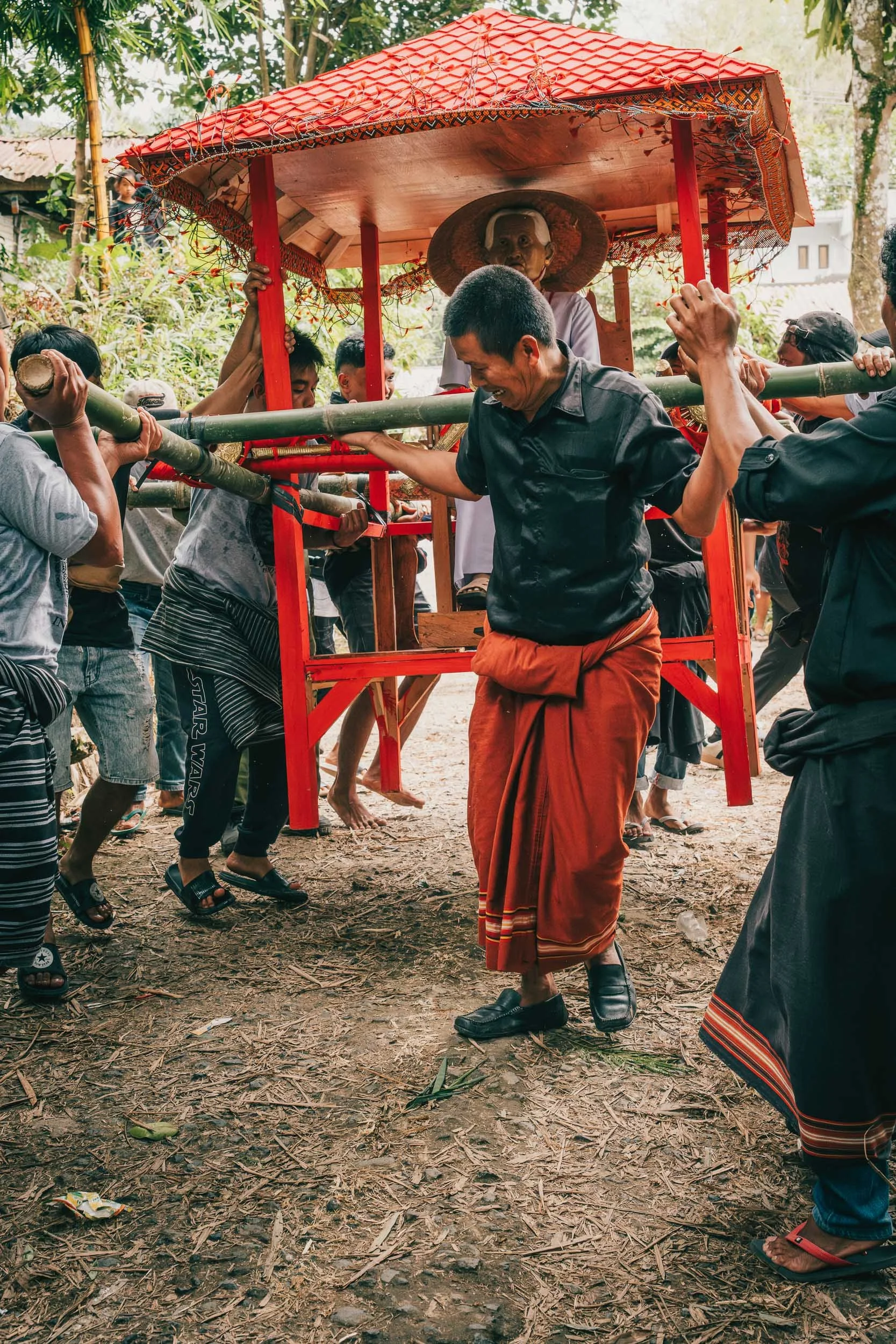
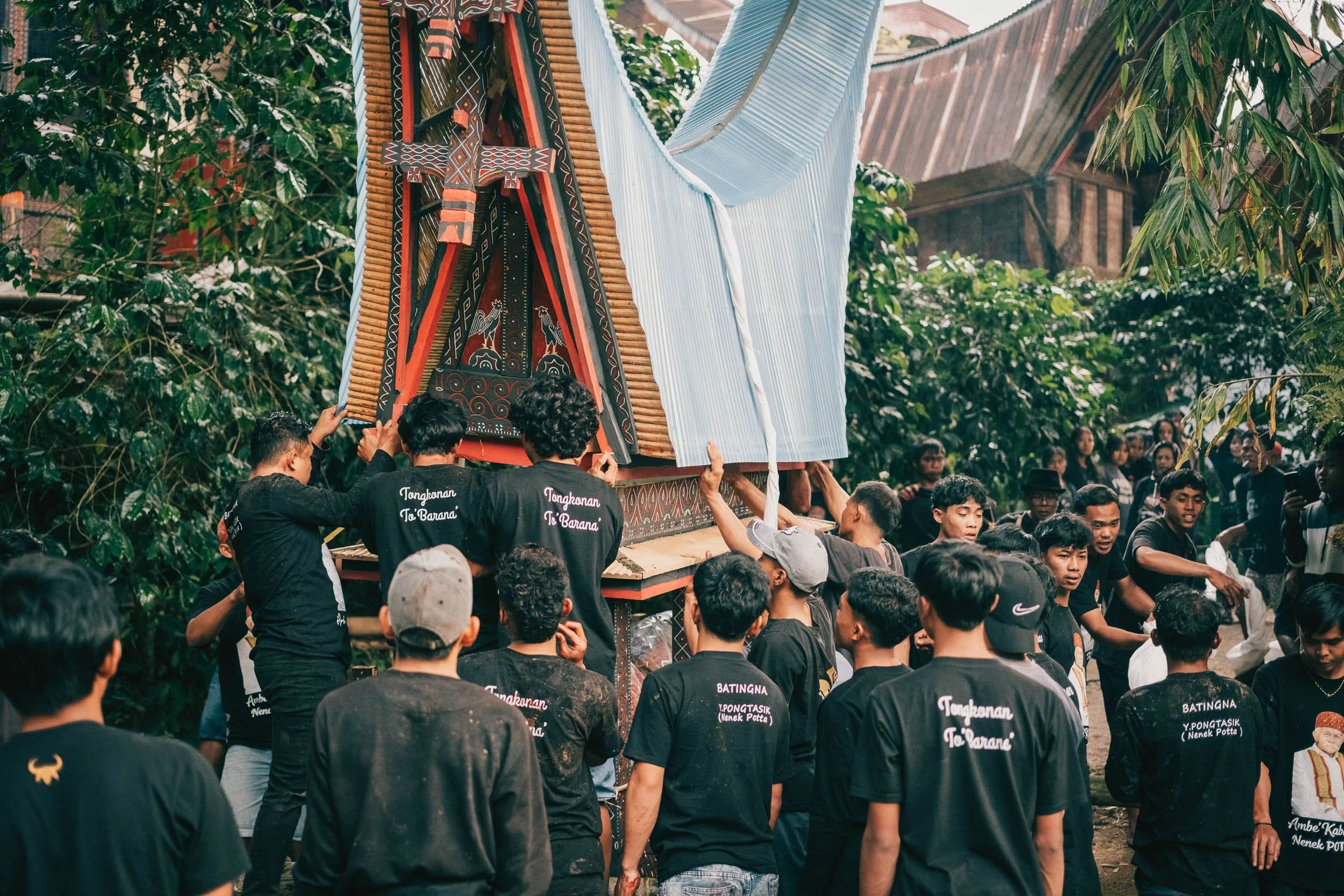
Afterwards the ceremony began to move through the village. Young men carried the wrapped body beneath an elaborate structure resembling a small house, accompanied by a gong, women holding a long cloth and the tau-tau, an effigy representing the deceased. For a while, cars and motorcycles simply had to wait as the procession occupied the main road.
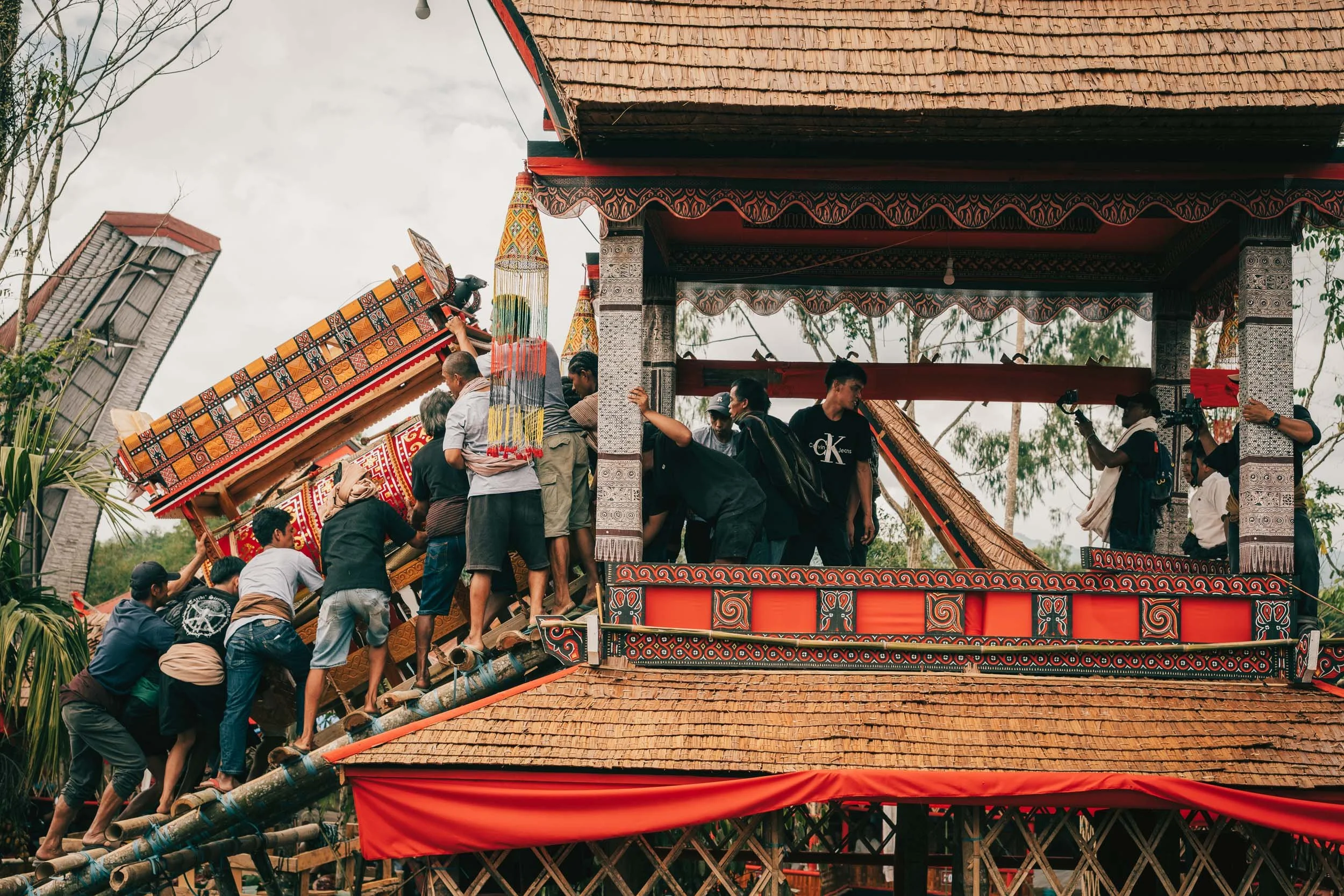
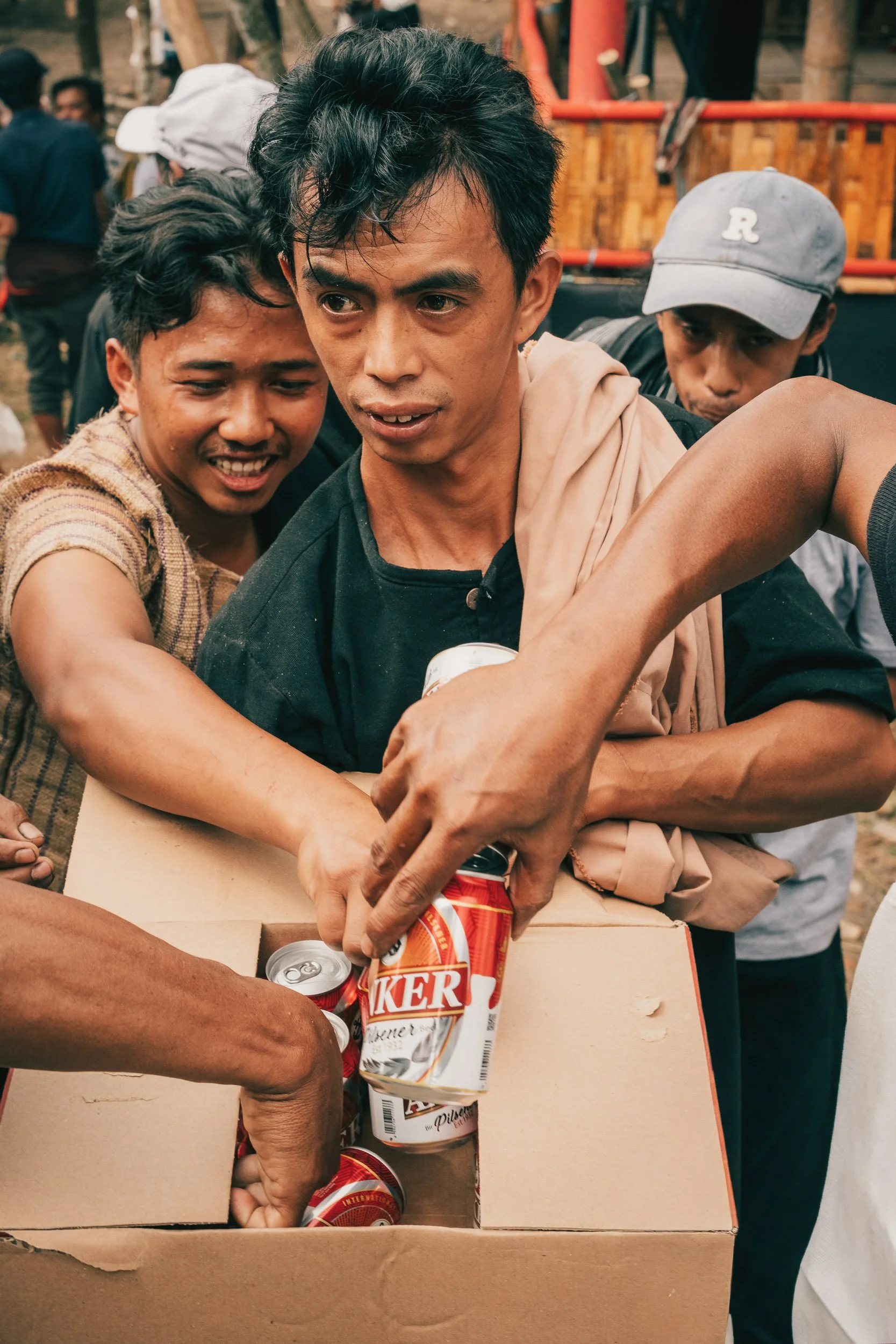
Back at the ceremonial ground, the deceased was raised onto an elevated structure overlooking the gathering. A buffalo was sacrificed, while the young men who had carried the heavy structure later gathered for beer. What struck me was how naturally solemn ritual, physical effort, laughter and socialising existed alongside one another. Mourning did not seem to require a single emotional state.
Day 2: Bringing the family home
The second stage revealed another important function of Rambu Solo’: bringing families back together.
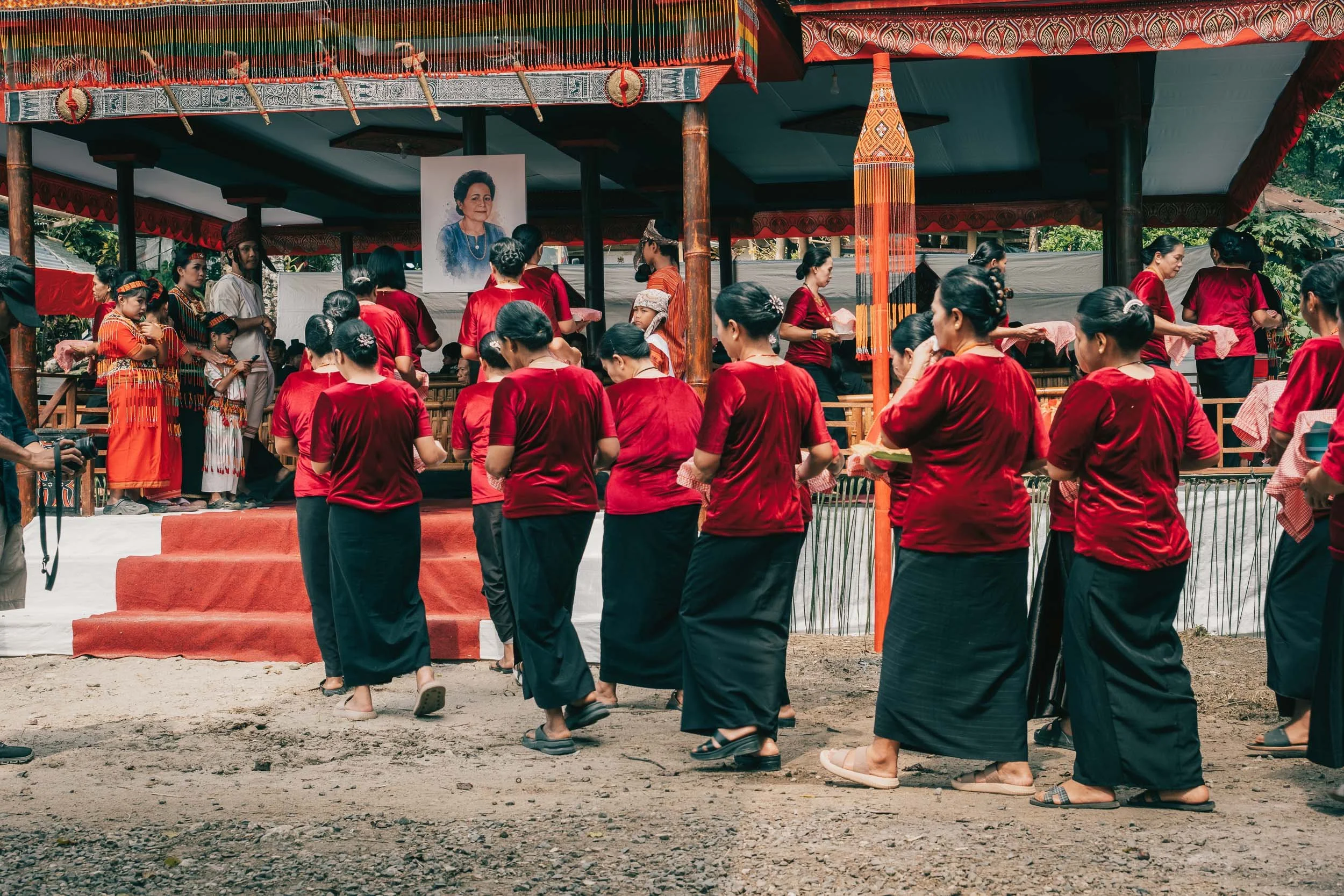
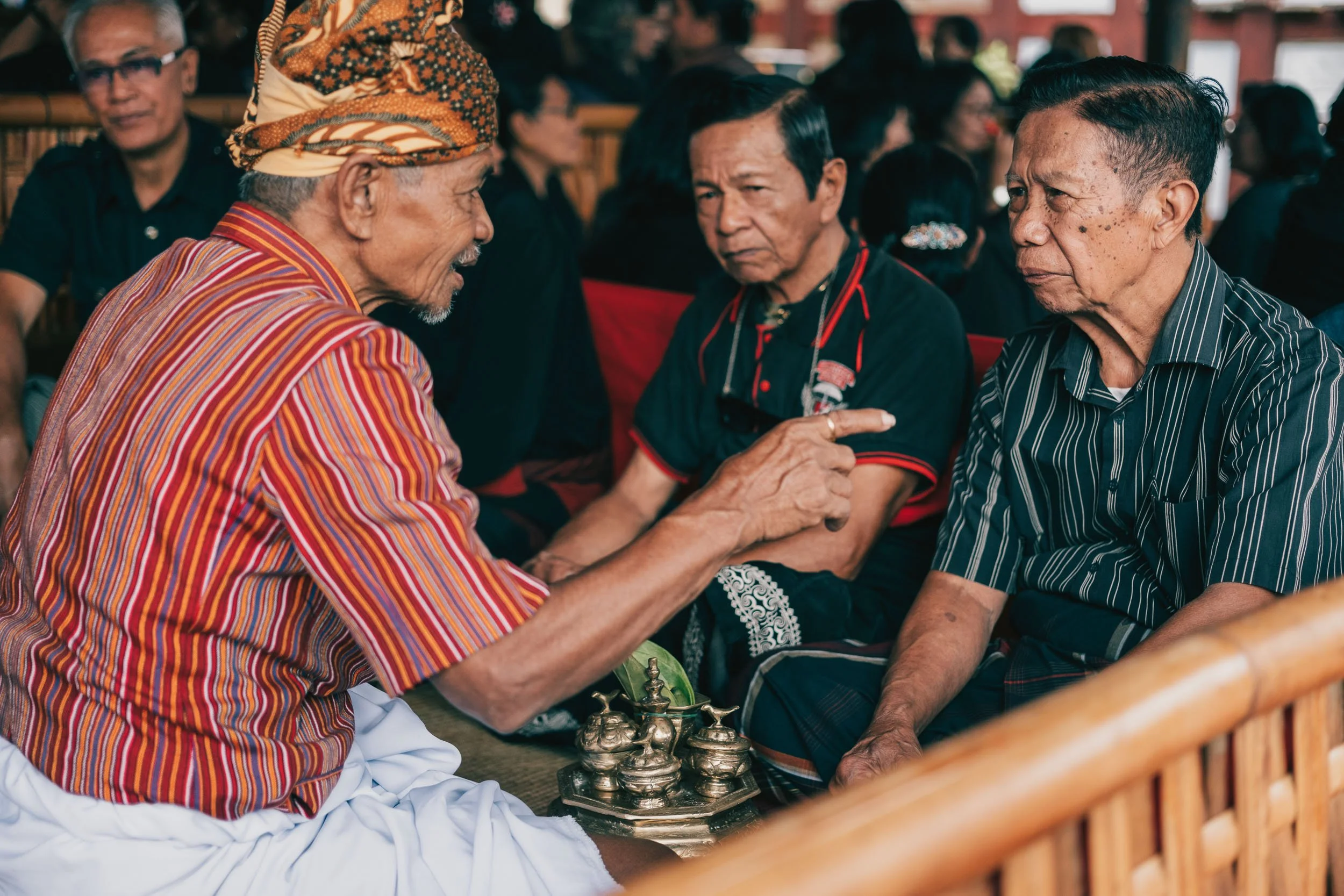
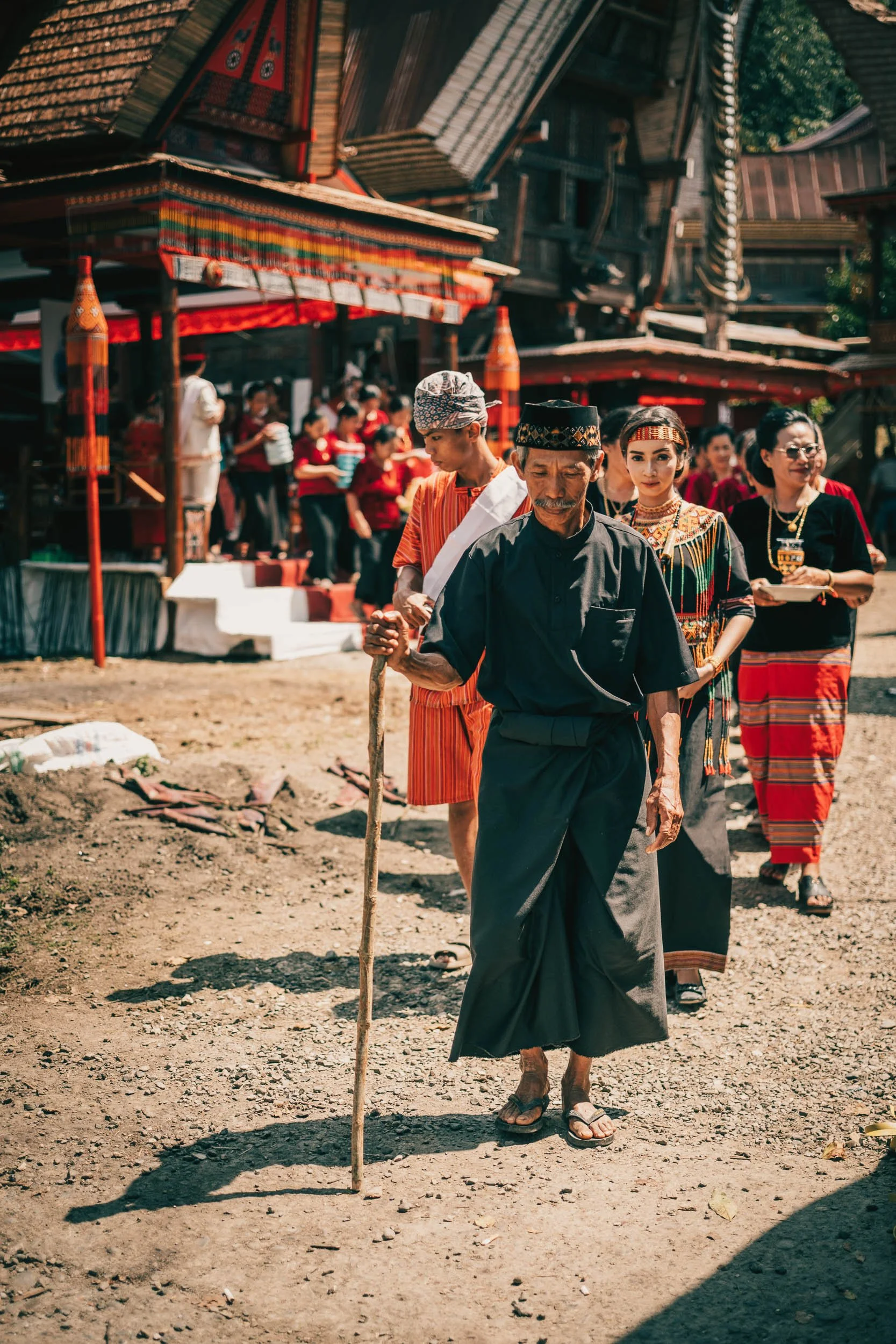
Groups of relatives entered the ceremonial area and were formally announced over a loudspeaker together with the places they had travelled from. We heard locations across Java and Sumatra, and at one point even South Korea. Many Toraja live far from the places their families originally came from, but funerals draw them back.
Even the way people are addressed reflects how strongly identity is connected to family relationships. During the reception, guests may be announced through the firstborn member of the youngest generation in their direct family line. Meyske’s mother, for example, may be introduced as “the mother of Ika.” I found this particularly striking because in many cultures, children are identified through their parents. Here, the relationship can work the other way around: older generations are socially located through those who come after them.
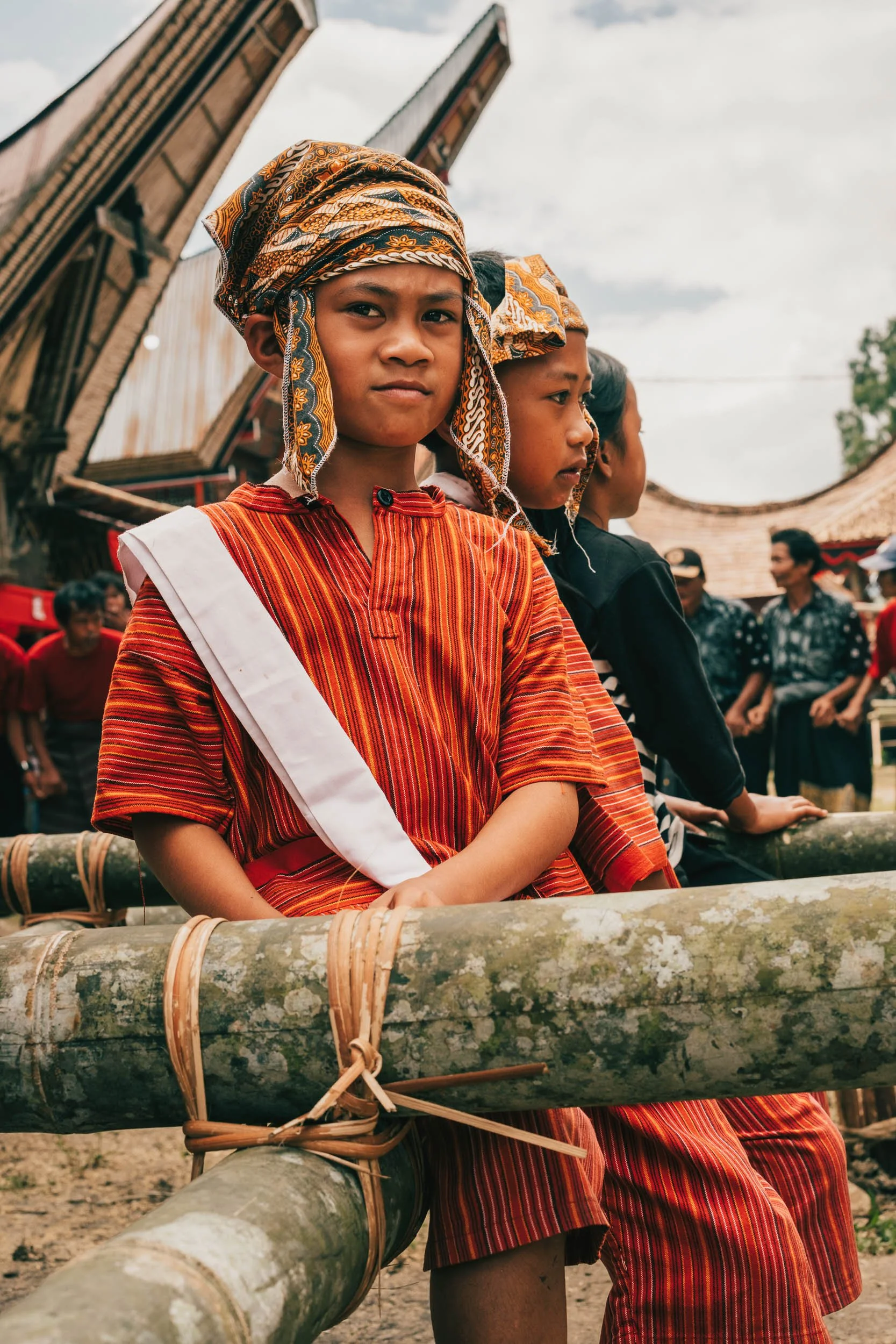
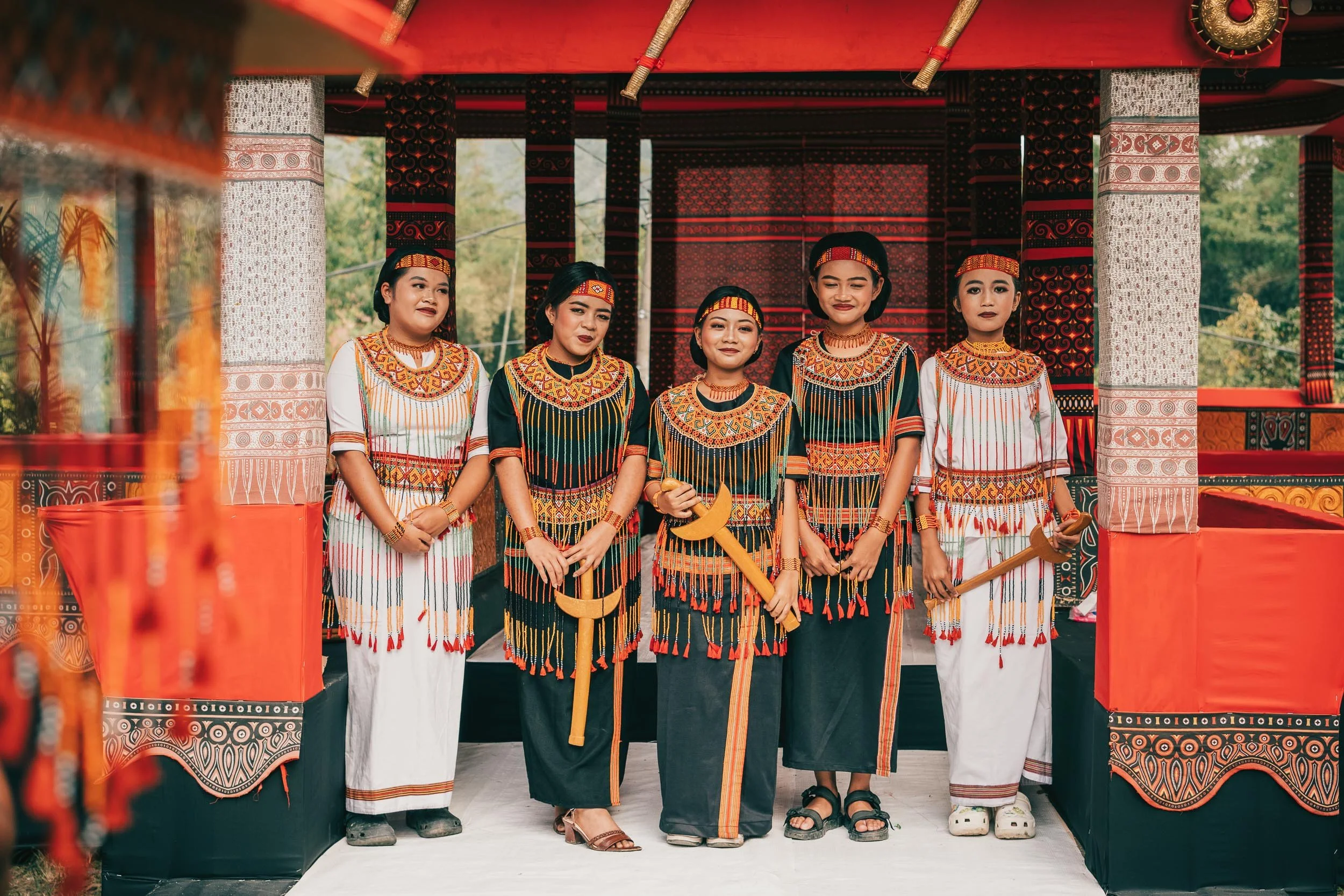
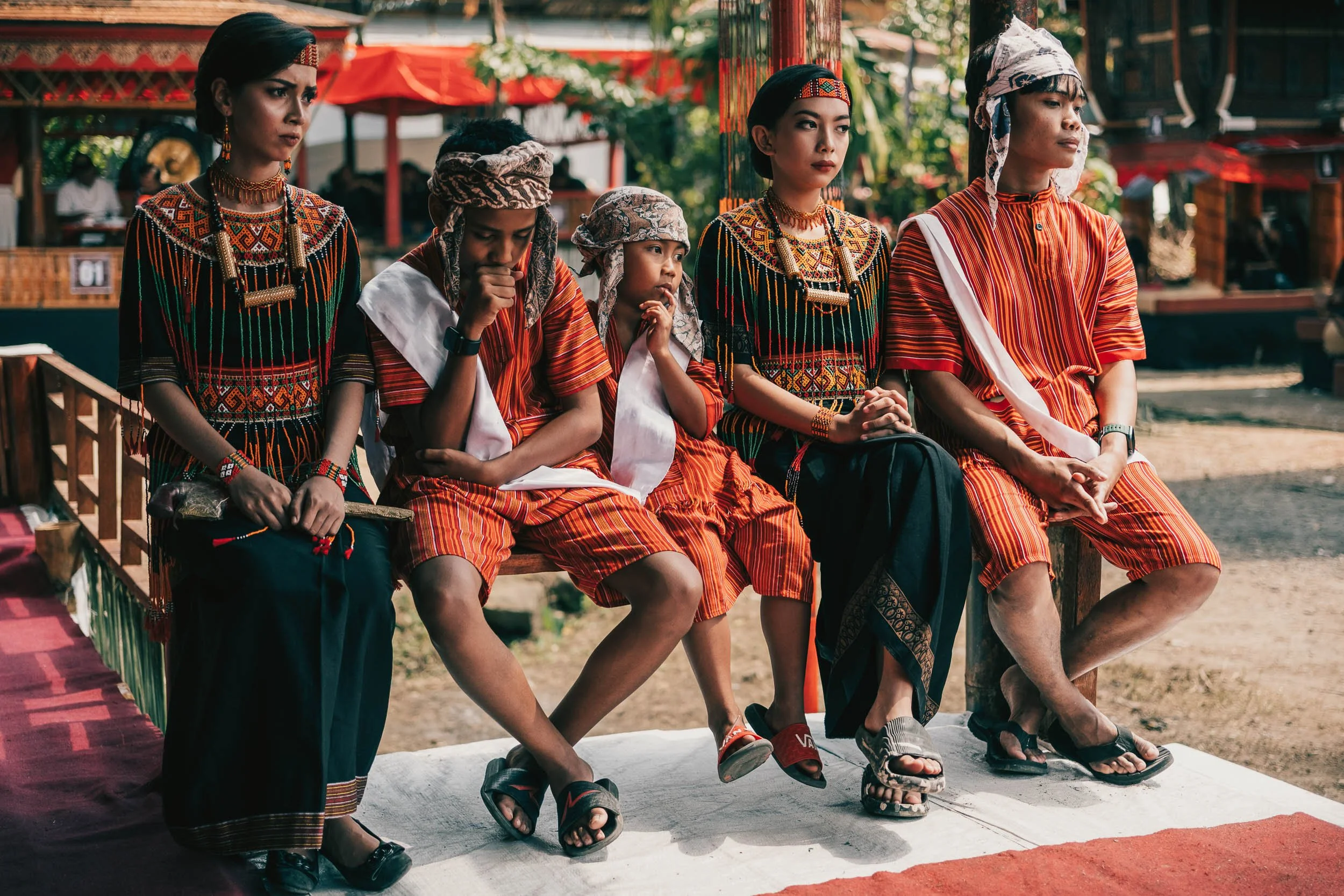
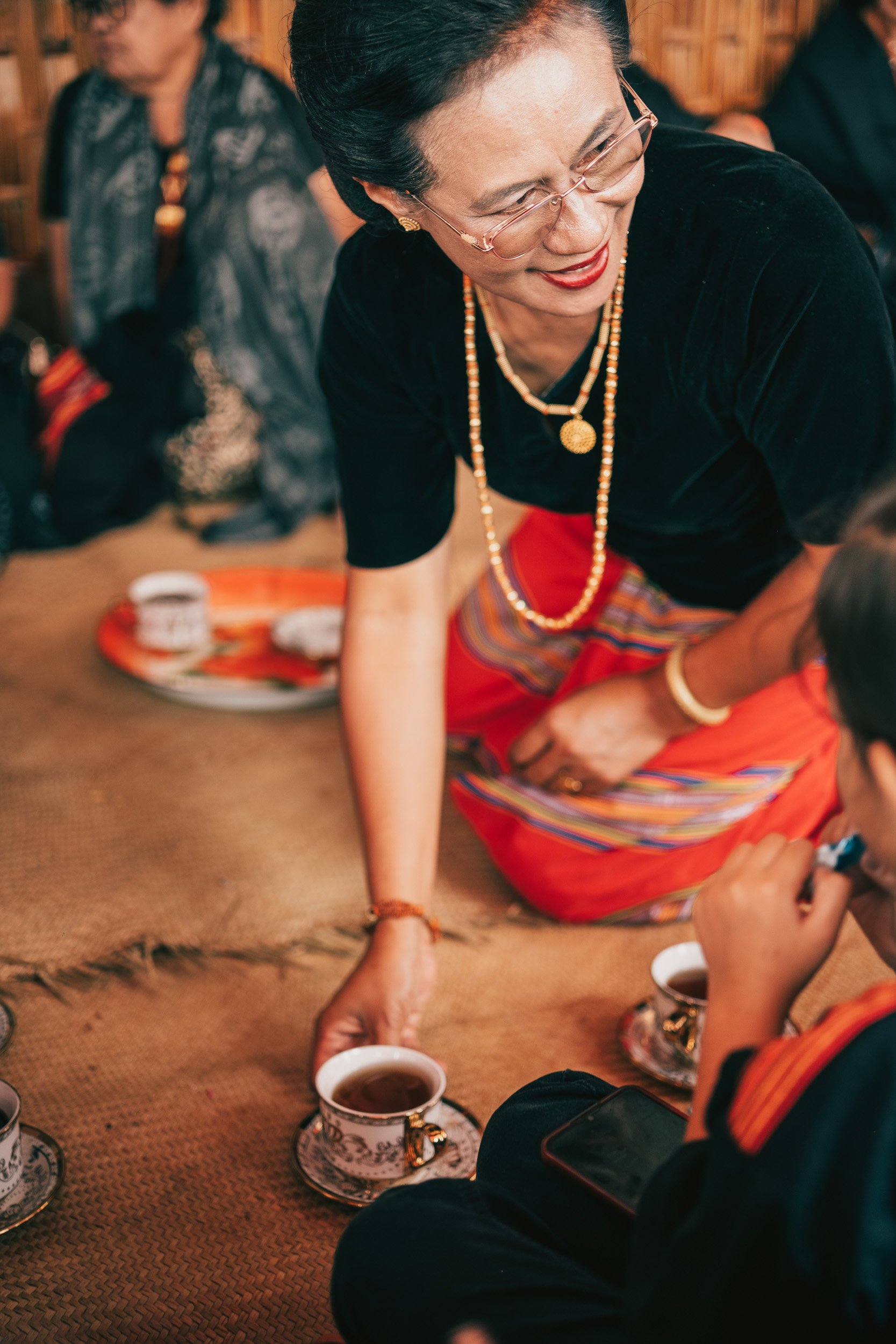
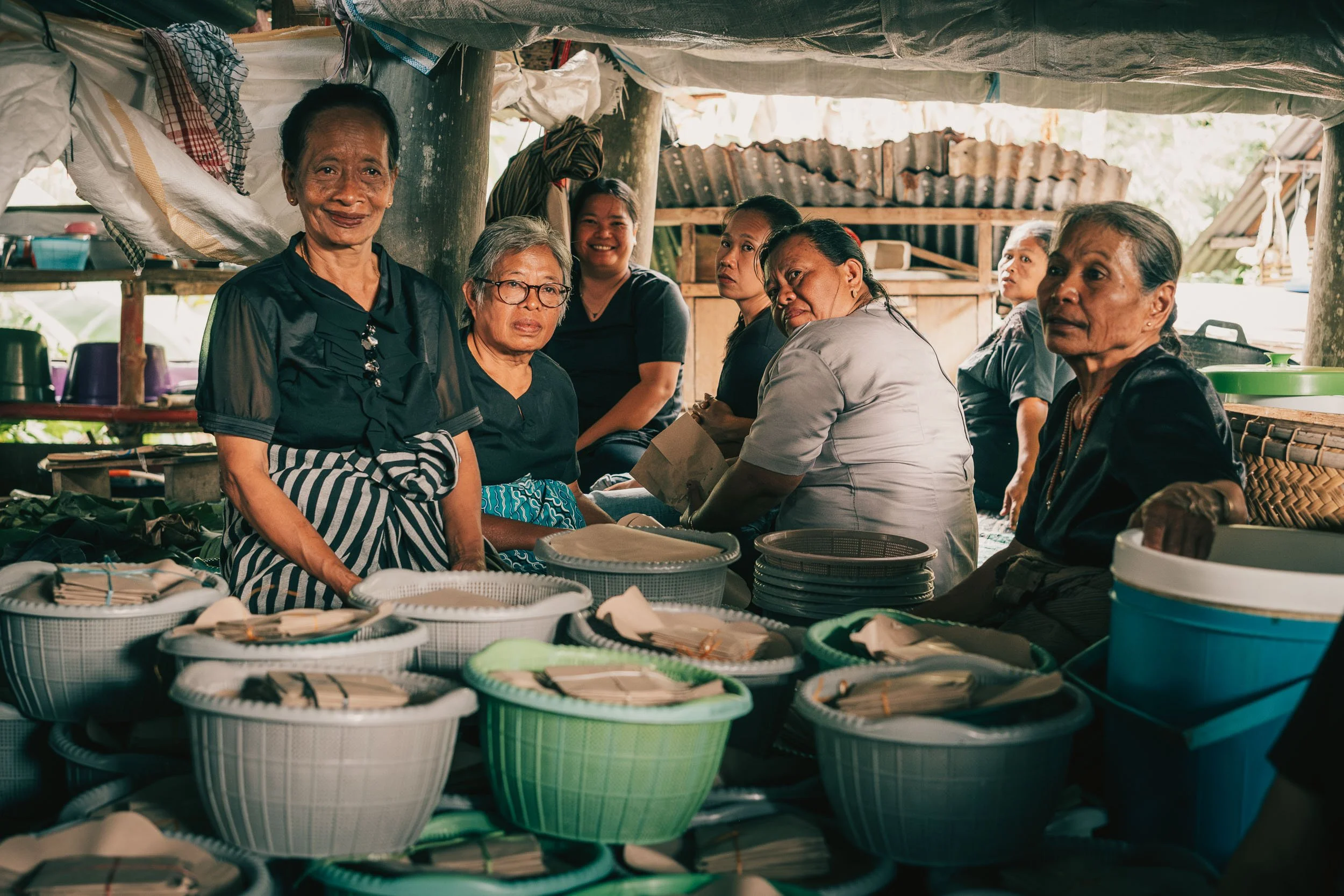
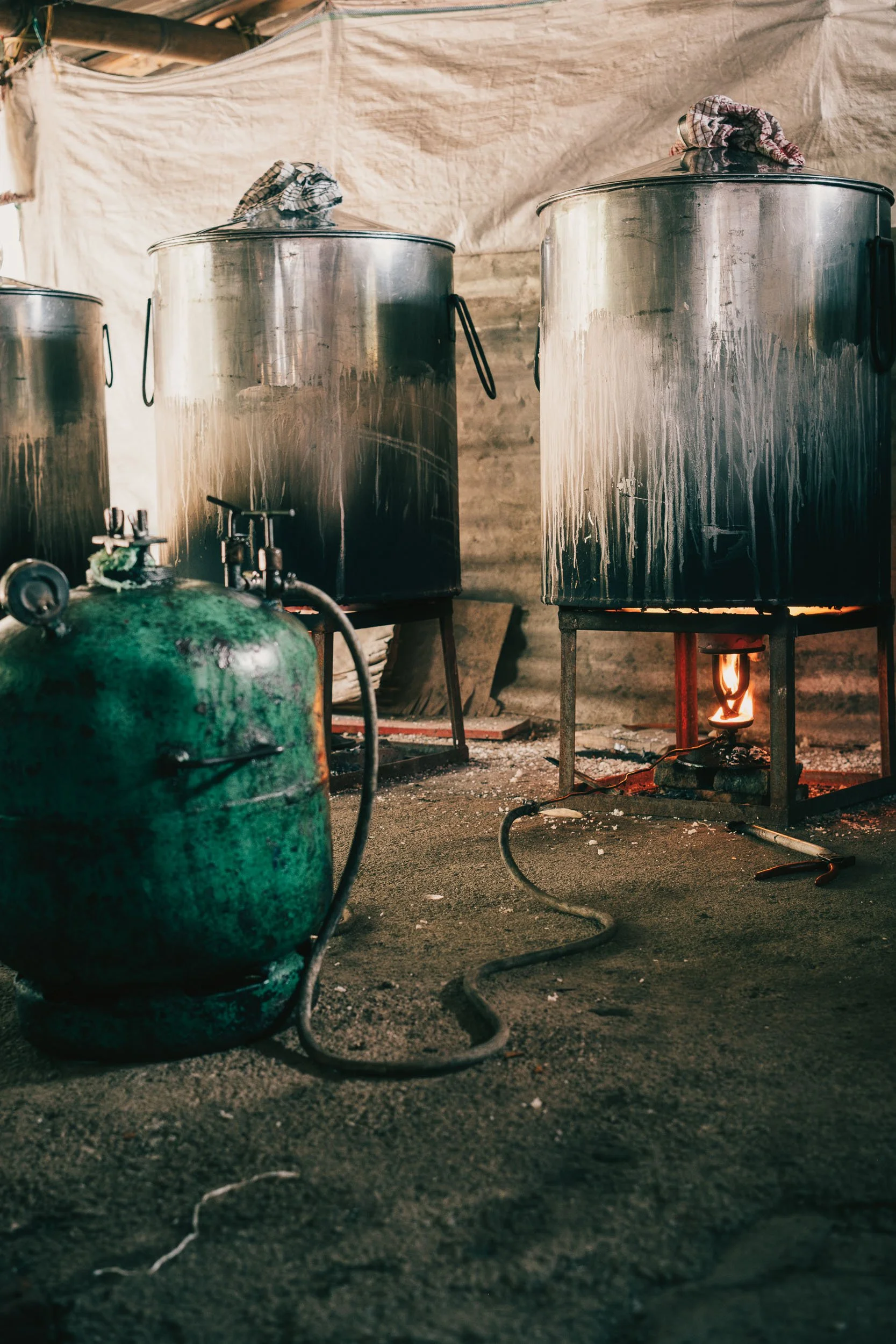
Children and grandchildren welcomed guests in traditional clothing, large amounts of food were prepared and served, and relatives met people they might otherwise rarely see. Rambu Solo’ does more than accompany the deceased. It also renews relationships among the living. Temporary bamboo structures provide shade and seating for hundreds of guests, kitchens prepare food on a large scale and families invest considerable time and money in the event.
Day 3: Buffaloes, obligations and meat
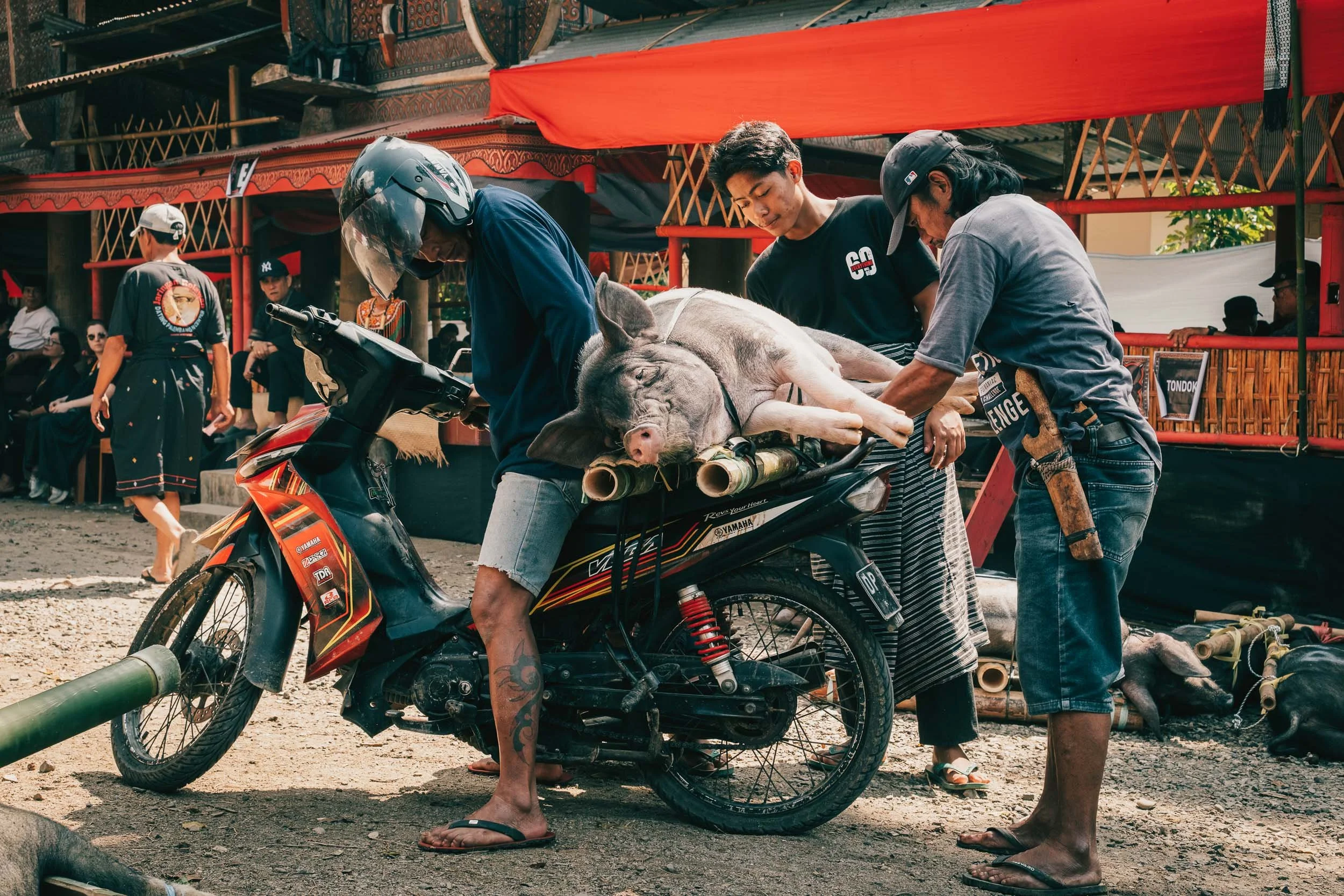
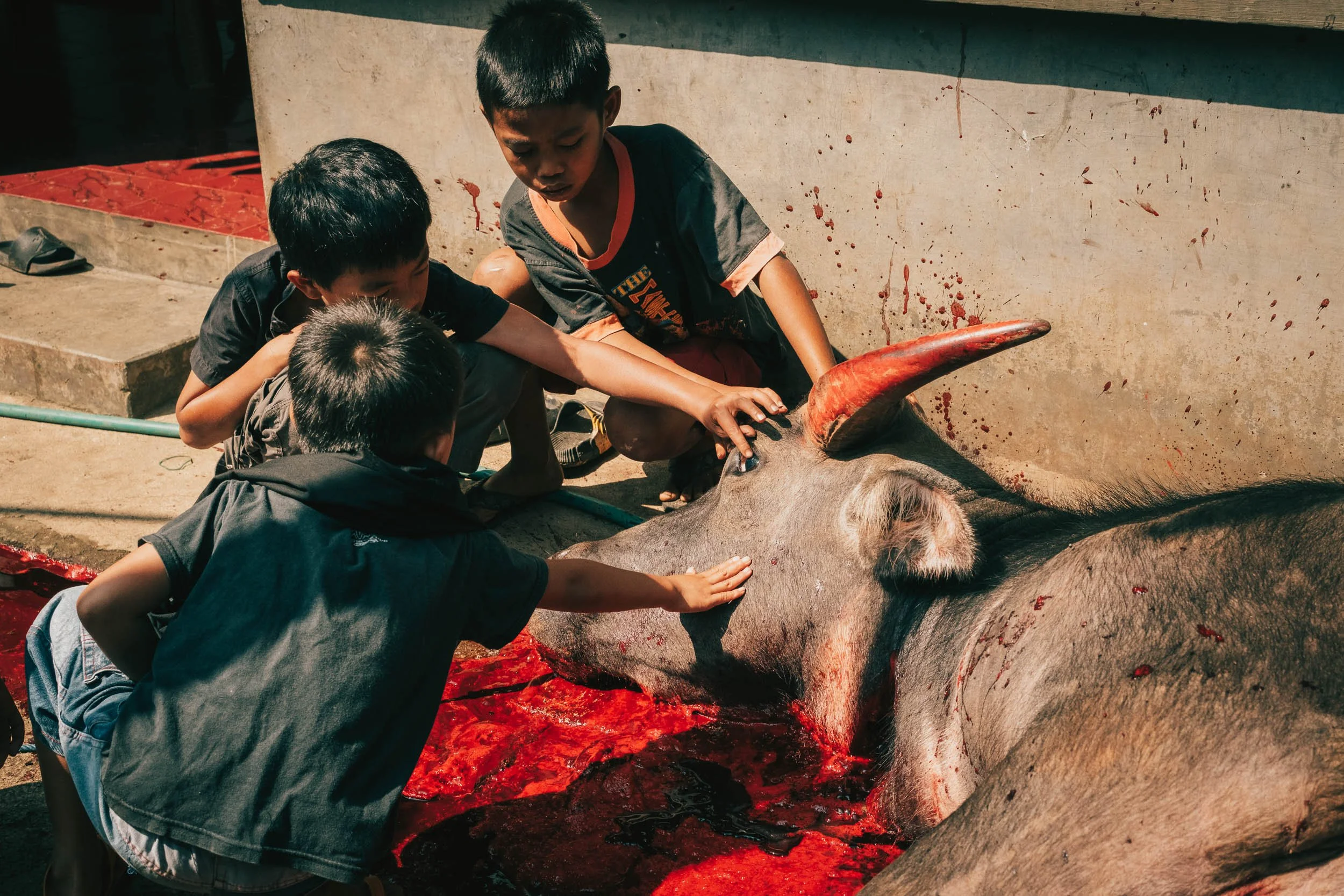
On the third day, the symbolic importance of the buffalo became very physical. At one ceremony, eighteen animals were slaughtered on the central ceremonial ground and then butchered by experienced men.
The buffaloes are not only sacrifices. Their meat helps feed the hundreds of people attending a large funeral, alongside pigs that are also slaughtered for the gathering. The animals are contributed by relatives, making them part of family obligations and reciprocity. An older man moved between the butchered buffaloes carrying a stick and indicated which portions belonged to which families. What initially looked like a practical task made the social relationships surrounding the funeral remarkably tangible. Contributions, kinship and status were translated into actual shares of meat.
Traditional status distinctions matter much less in everyday life today, but they still shape Rambu Solo’. One of the most prestigious forms traditionally involves 24 buffaloes and is reserved for members of the highest of four hereditary status groups. Offering such a funeral is therefore not only an expression of wealth, but also one of the greatest honours a family can give to the deceased.
Trigger warning: The photo gallery below contains images of blood, dead buffalo, and buffalo being slaughtered.
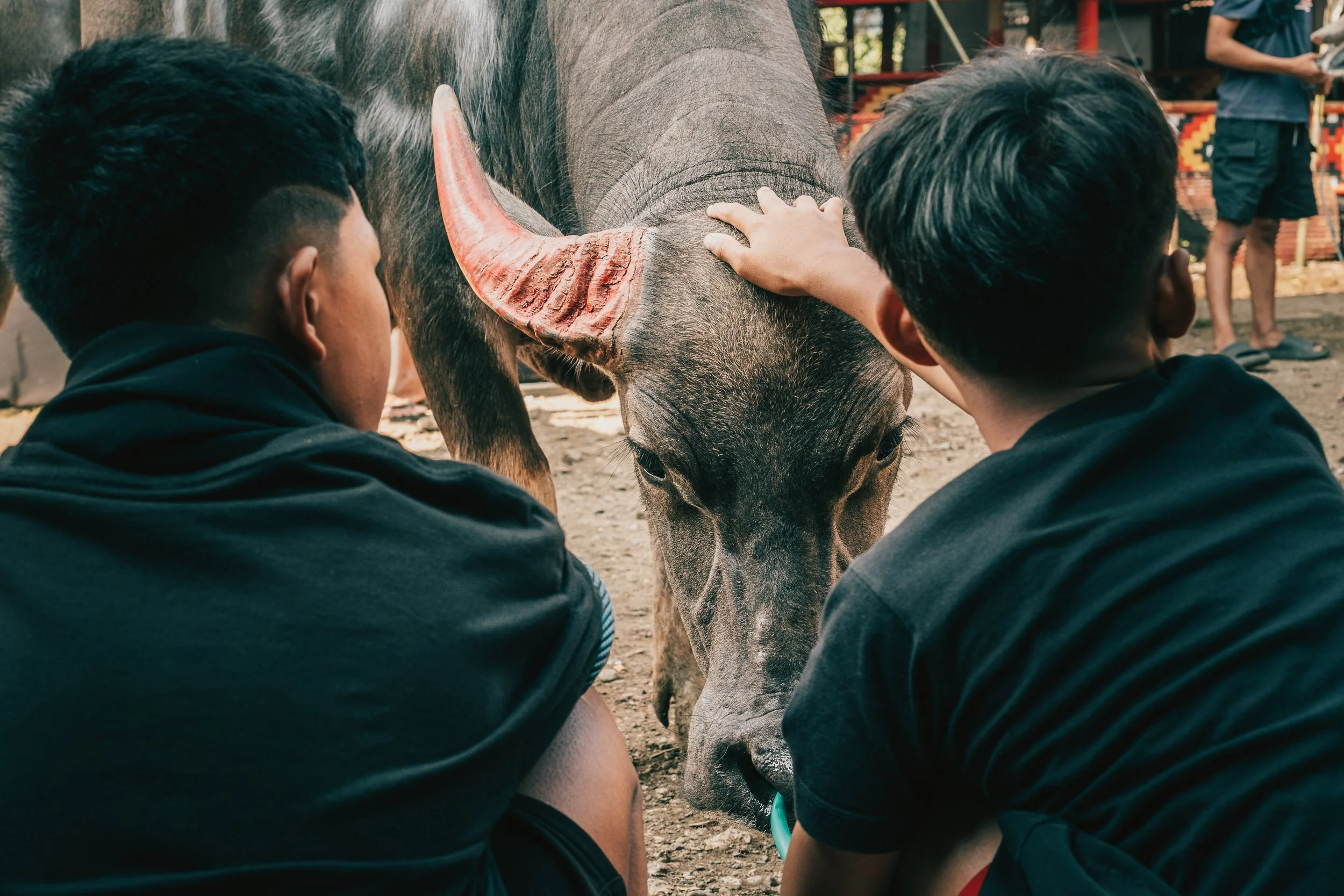
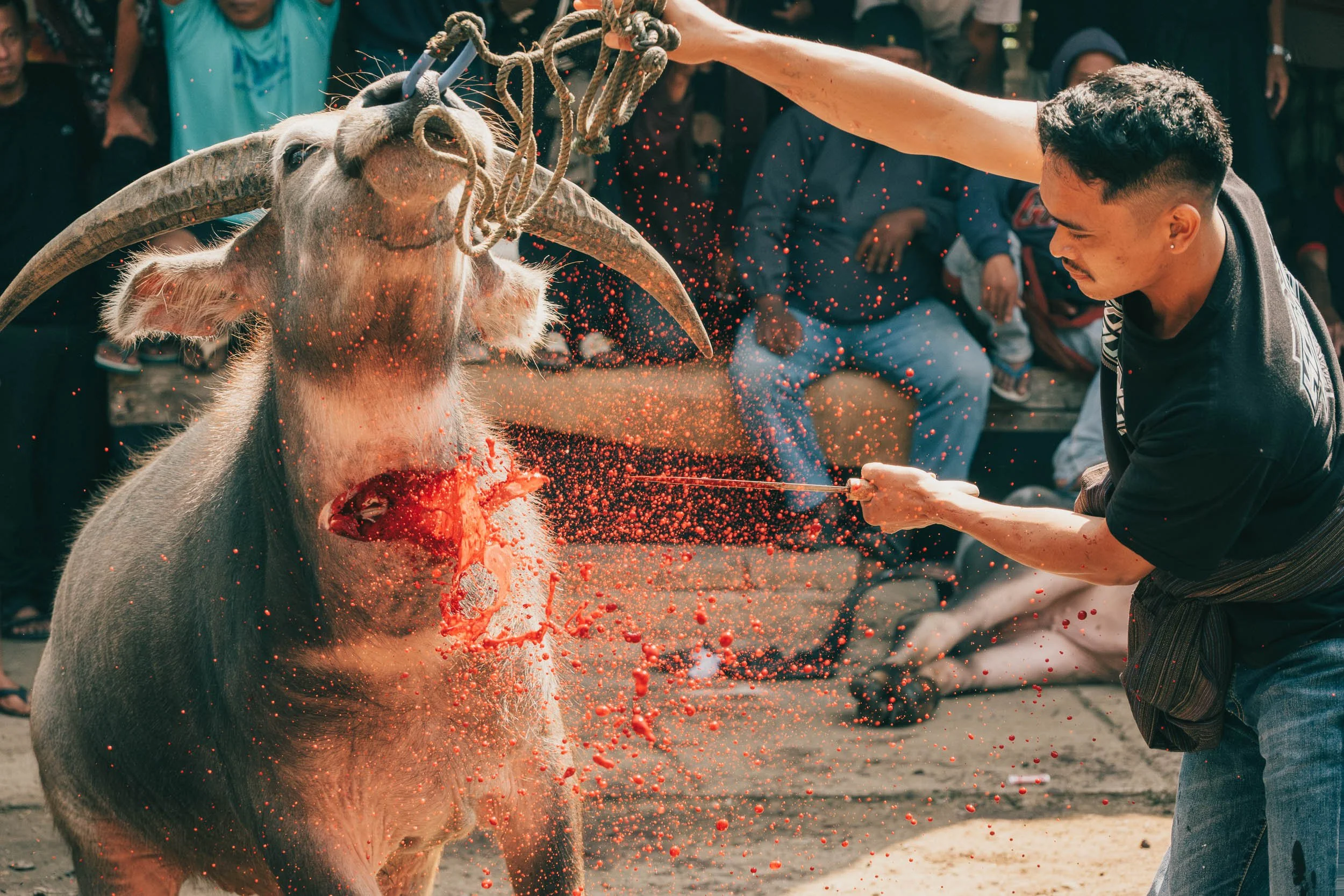
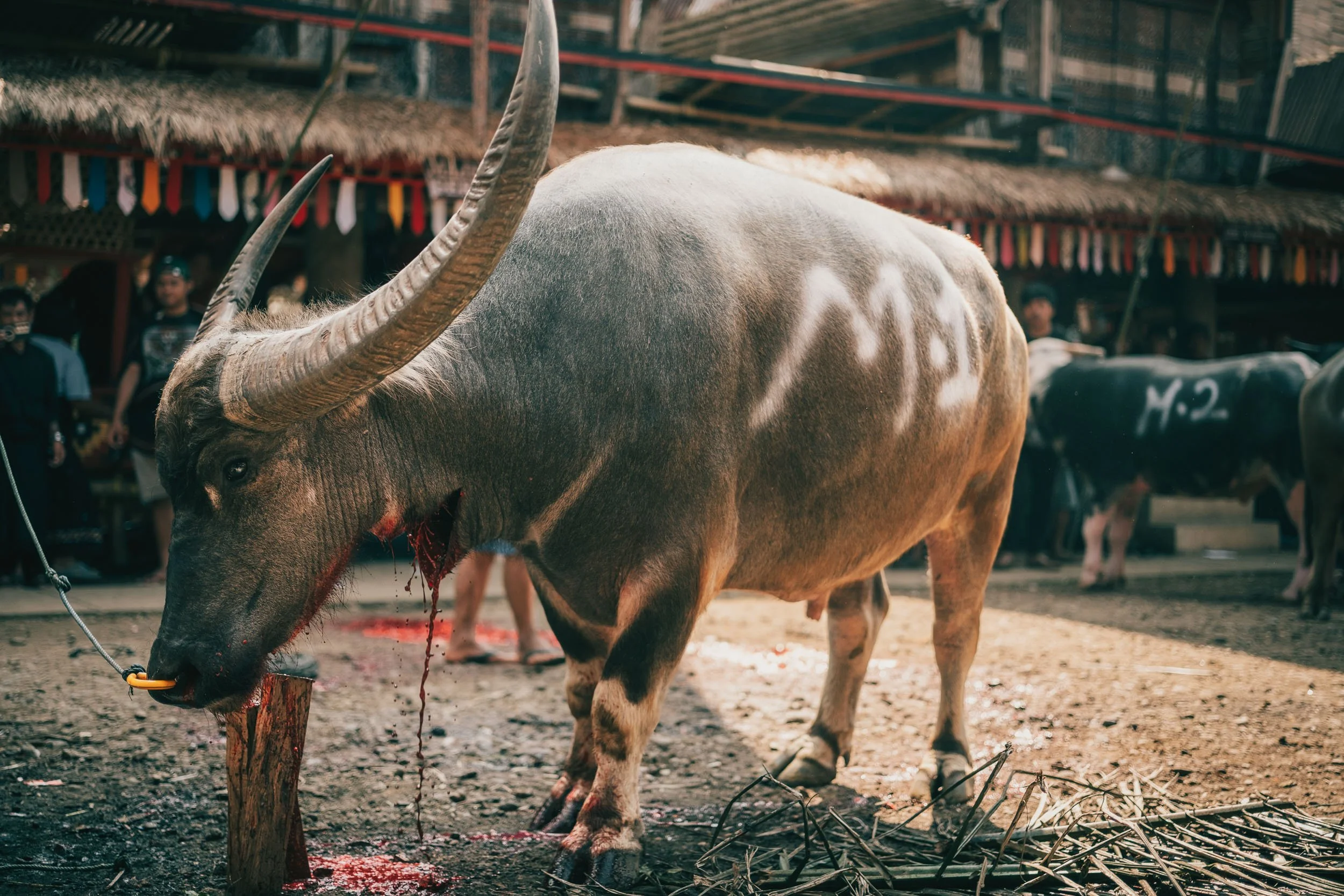
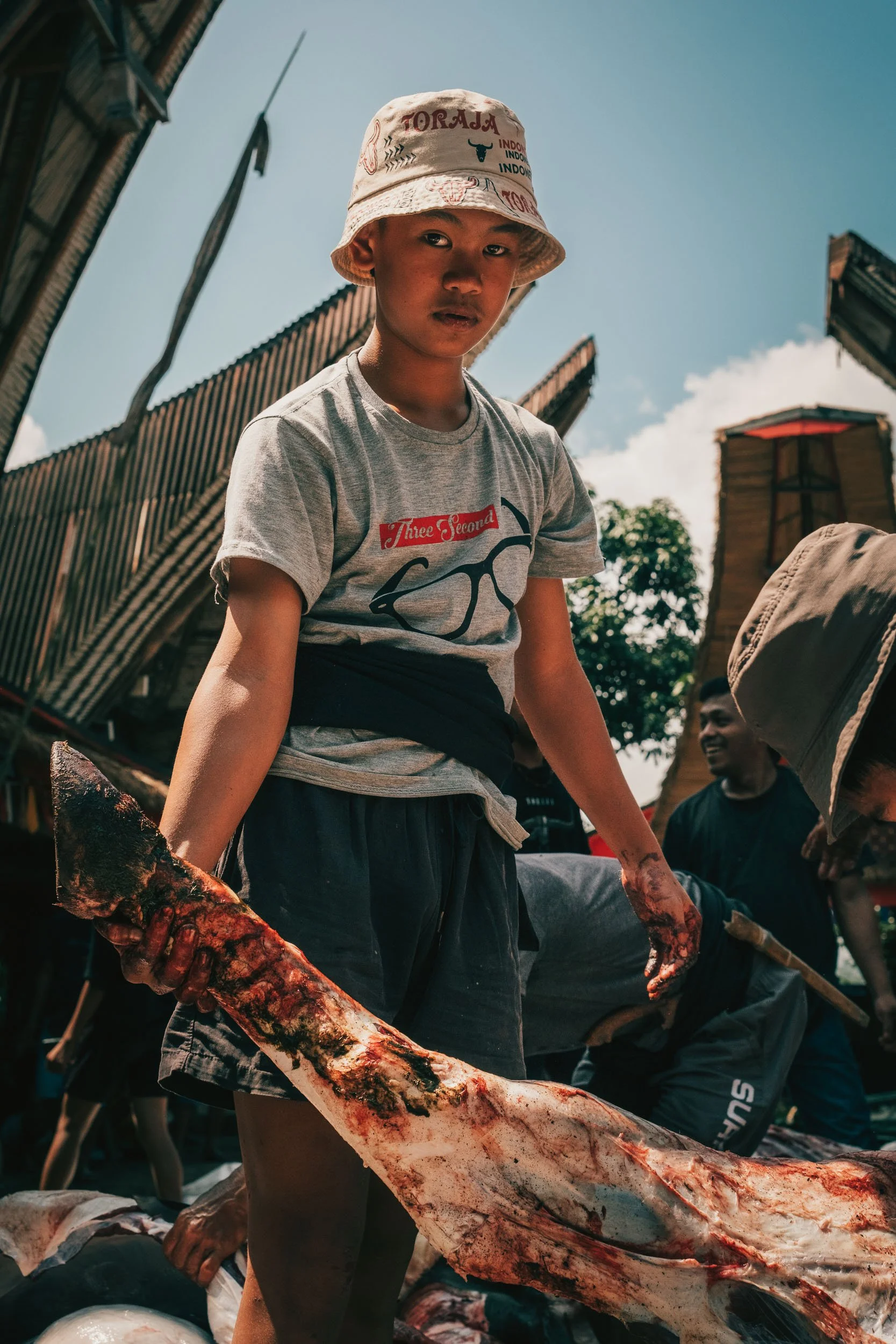
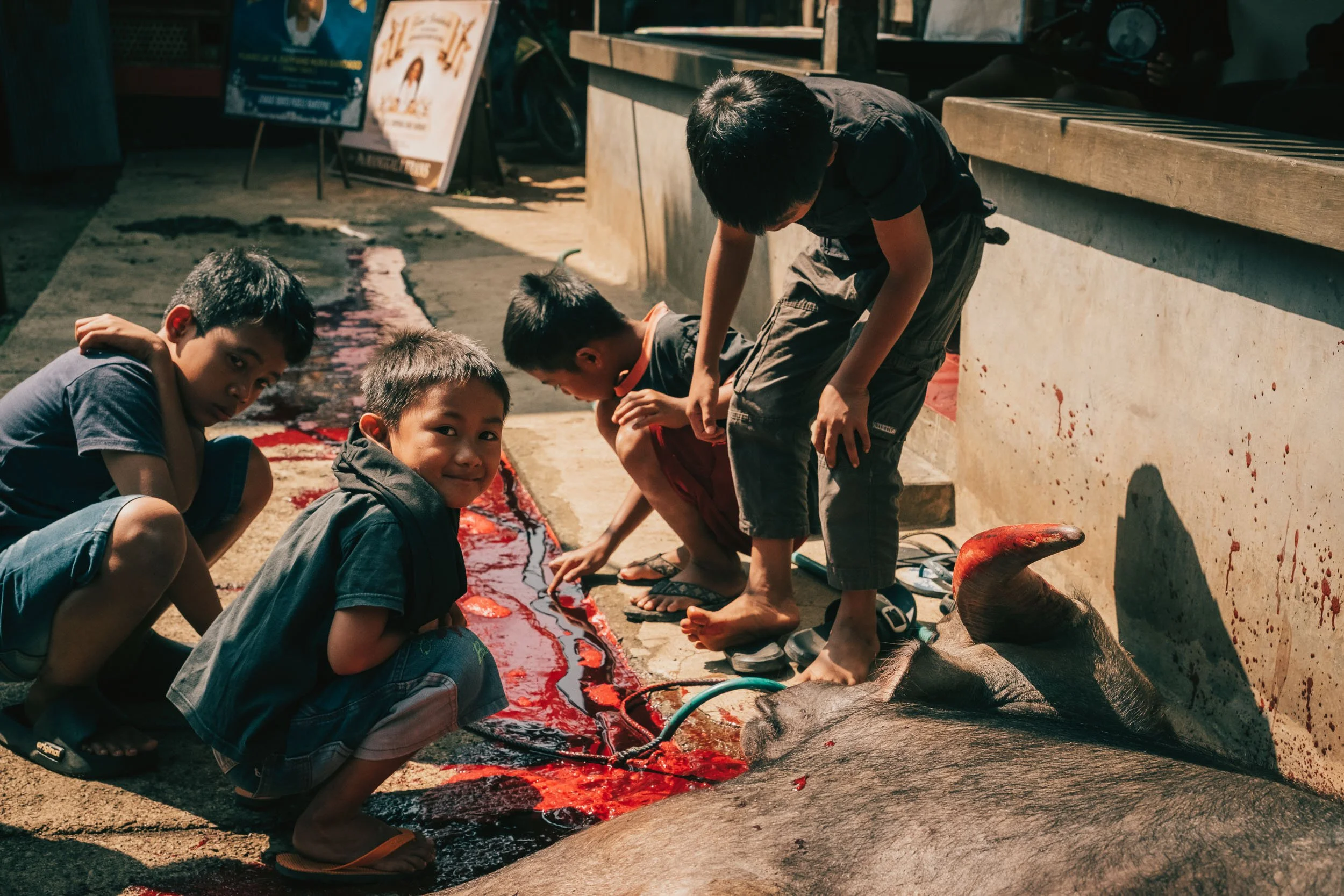
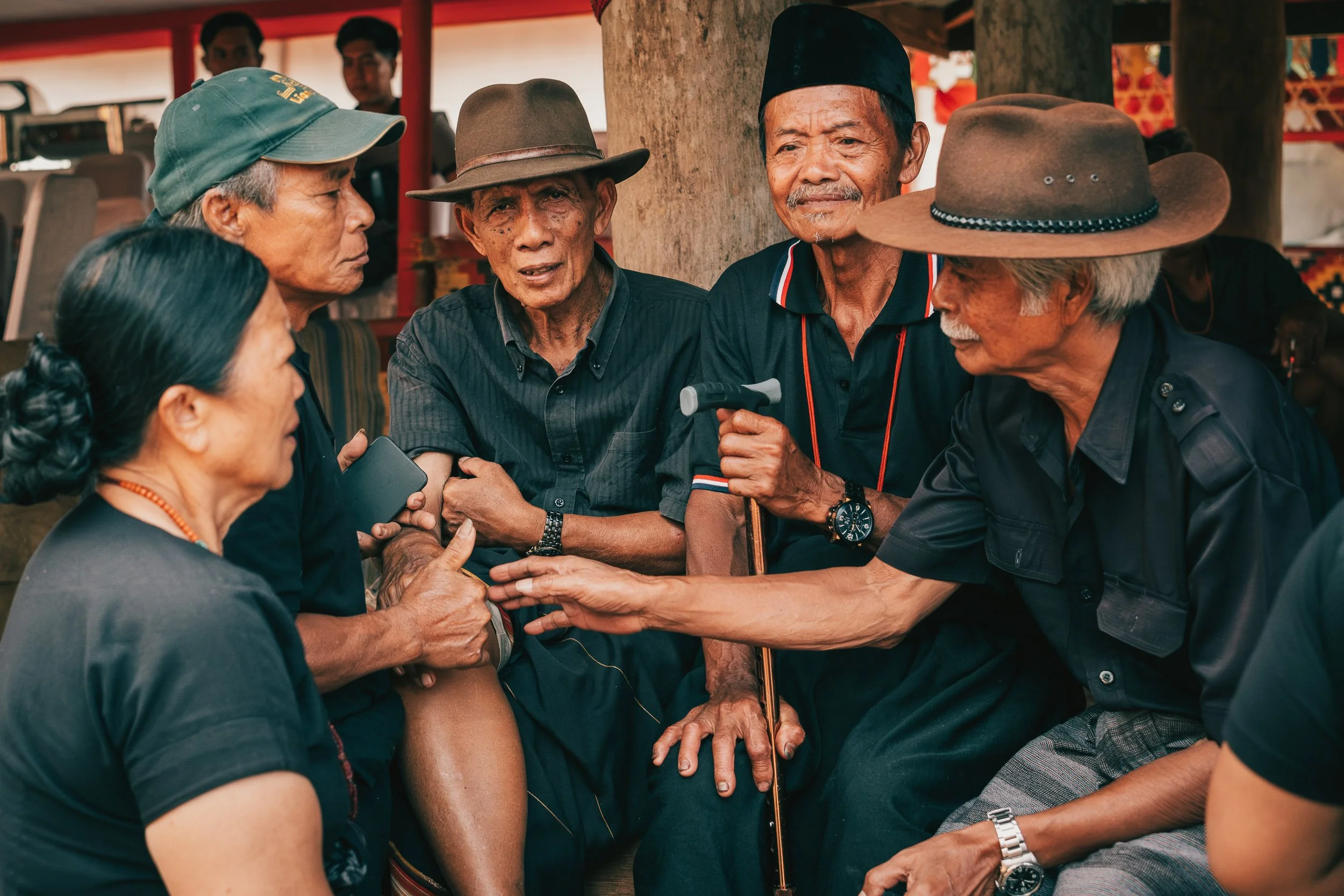
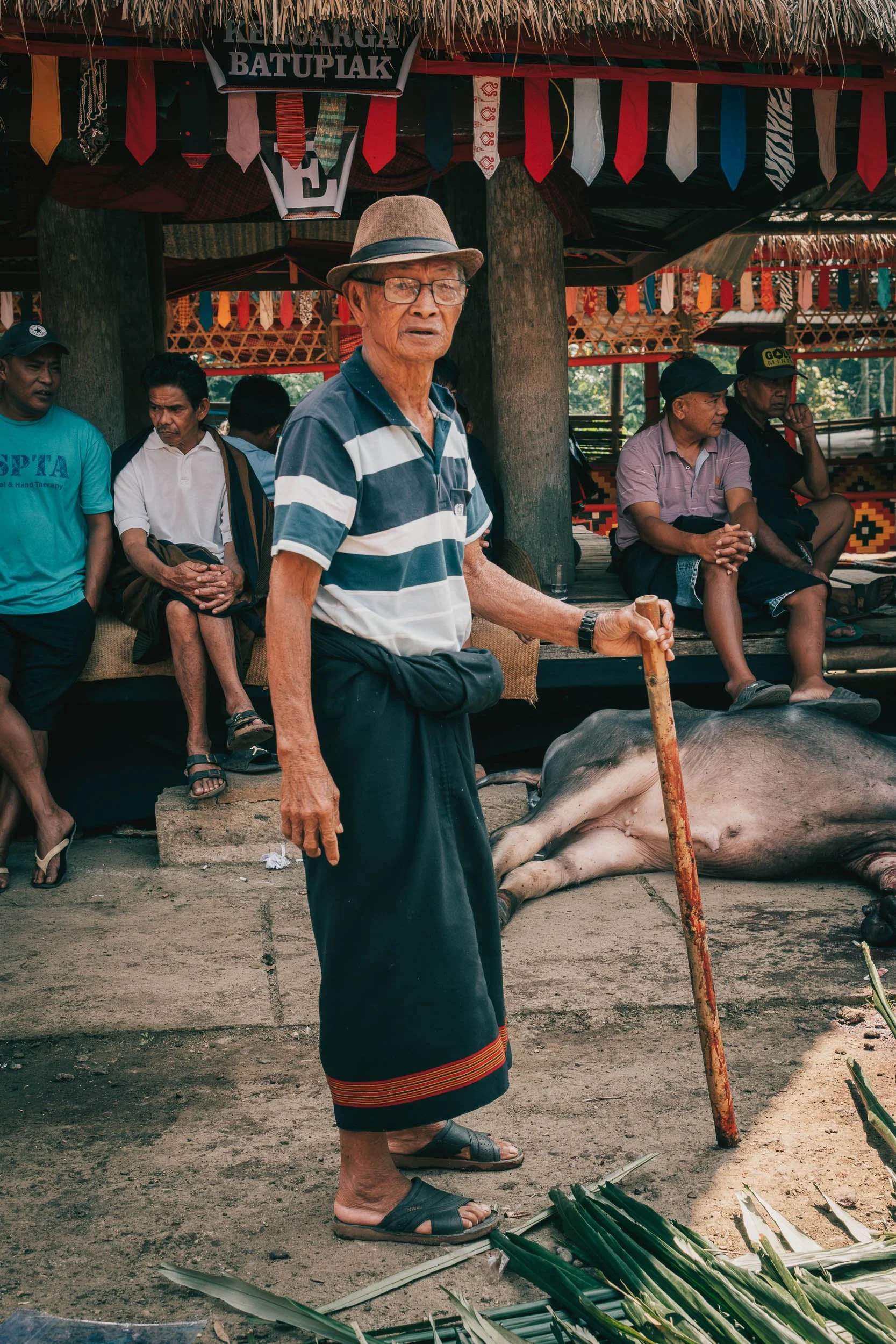
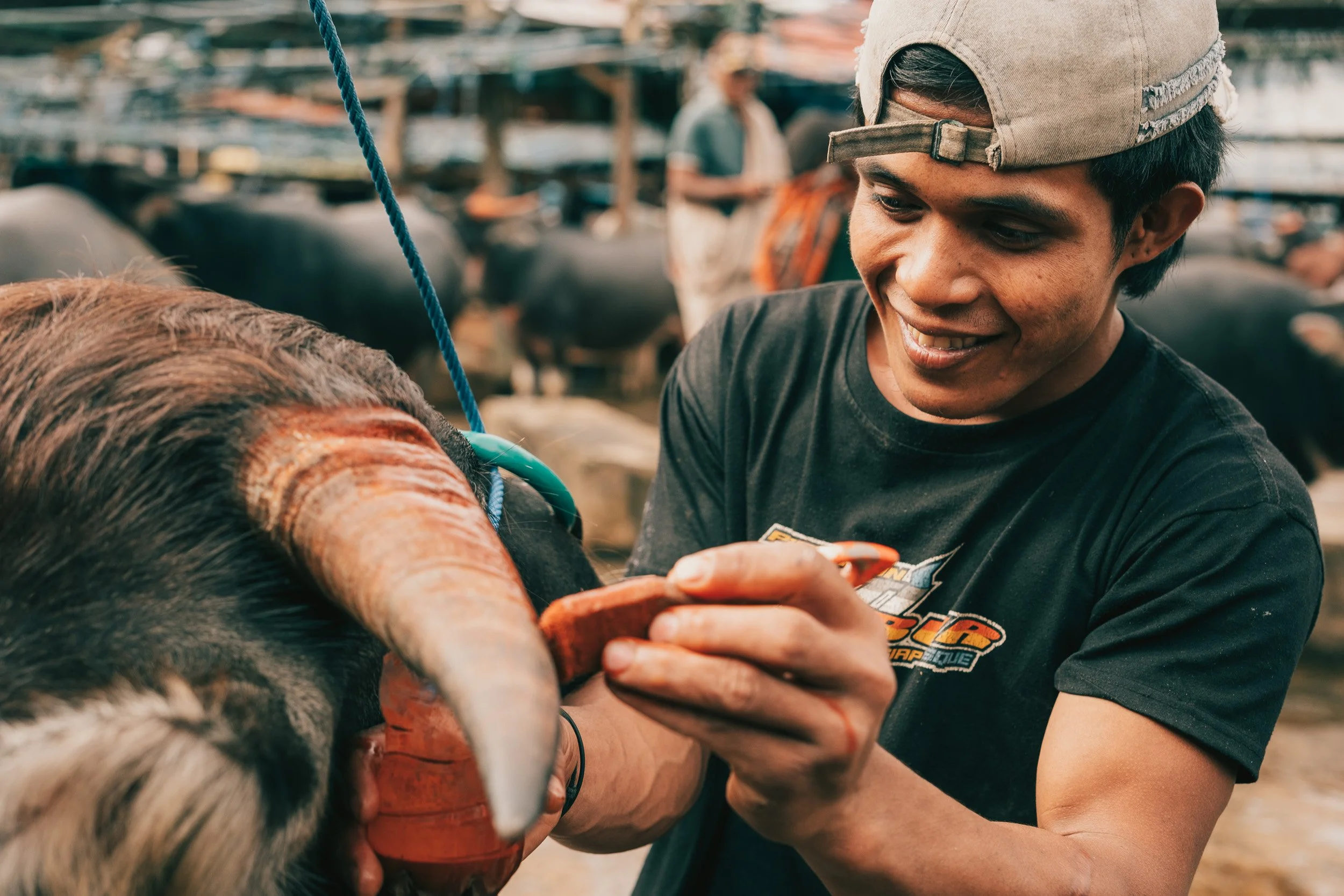
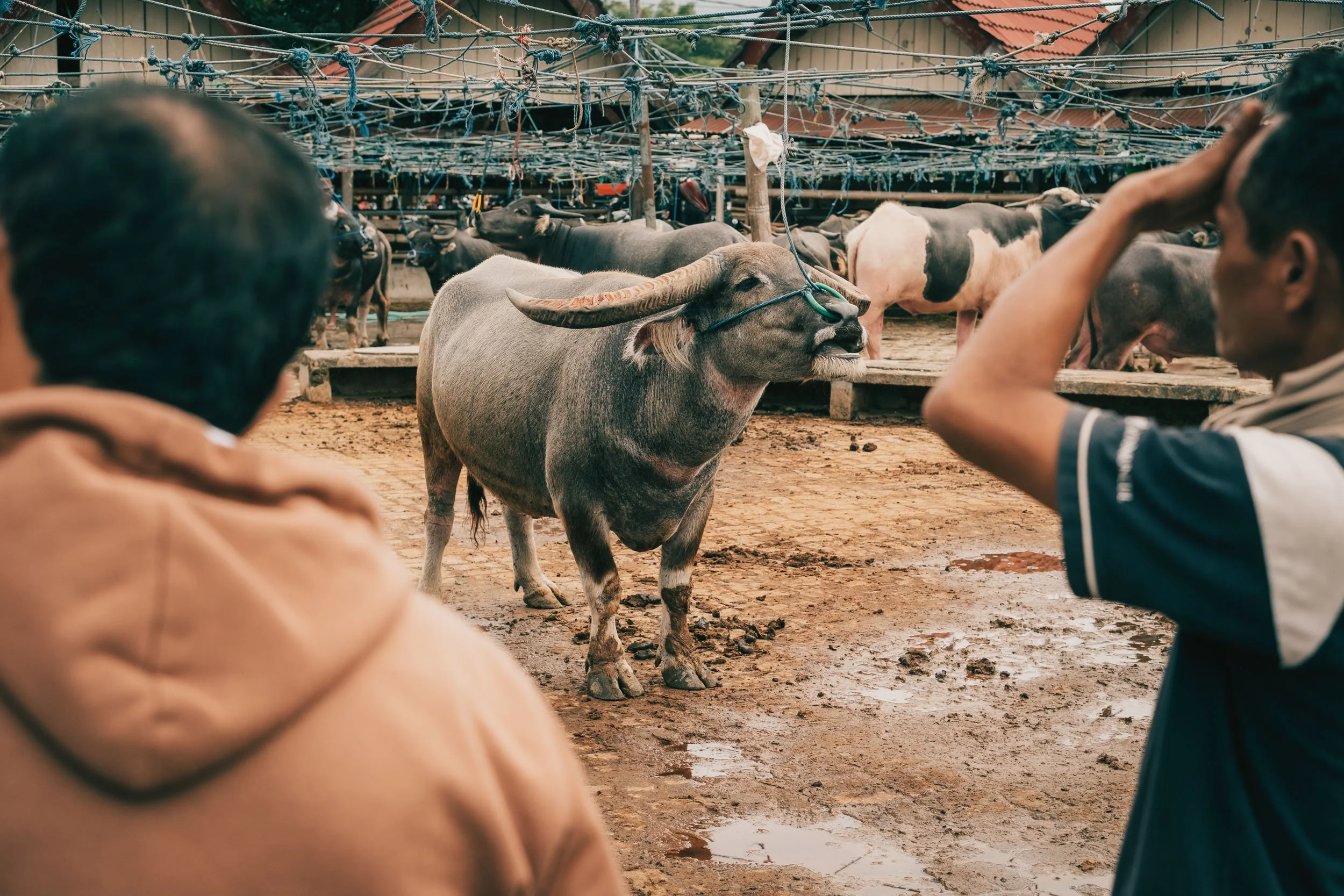
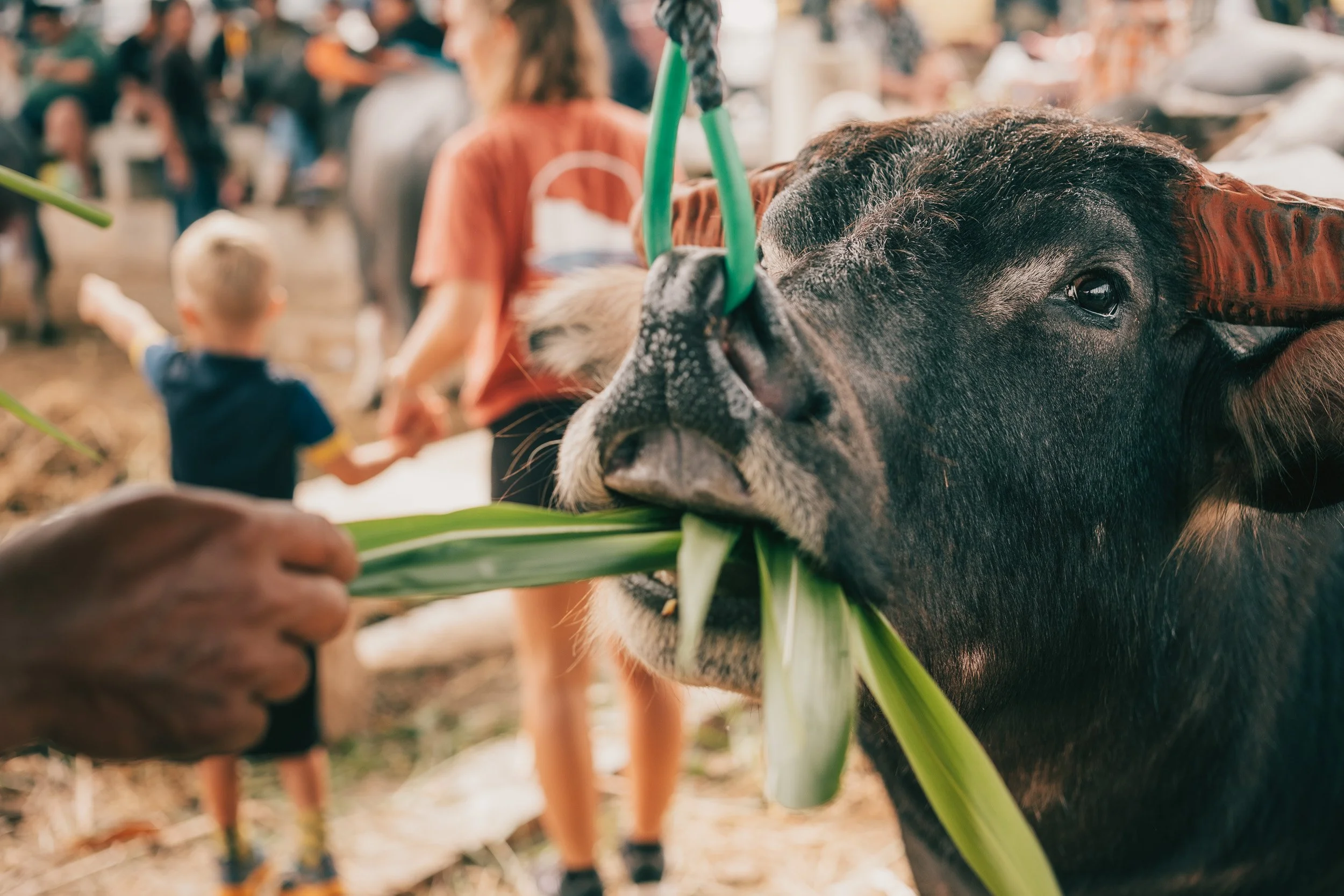
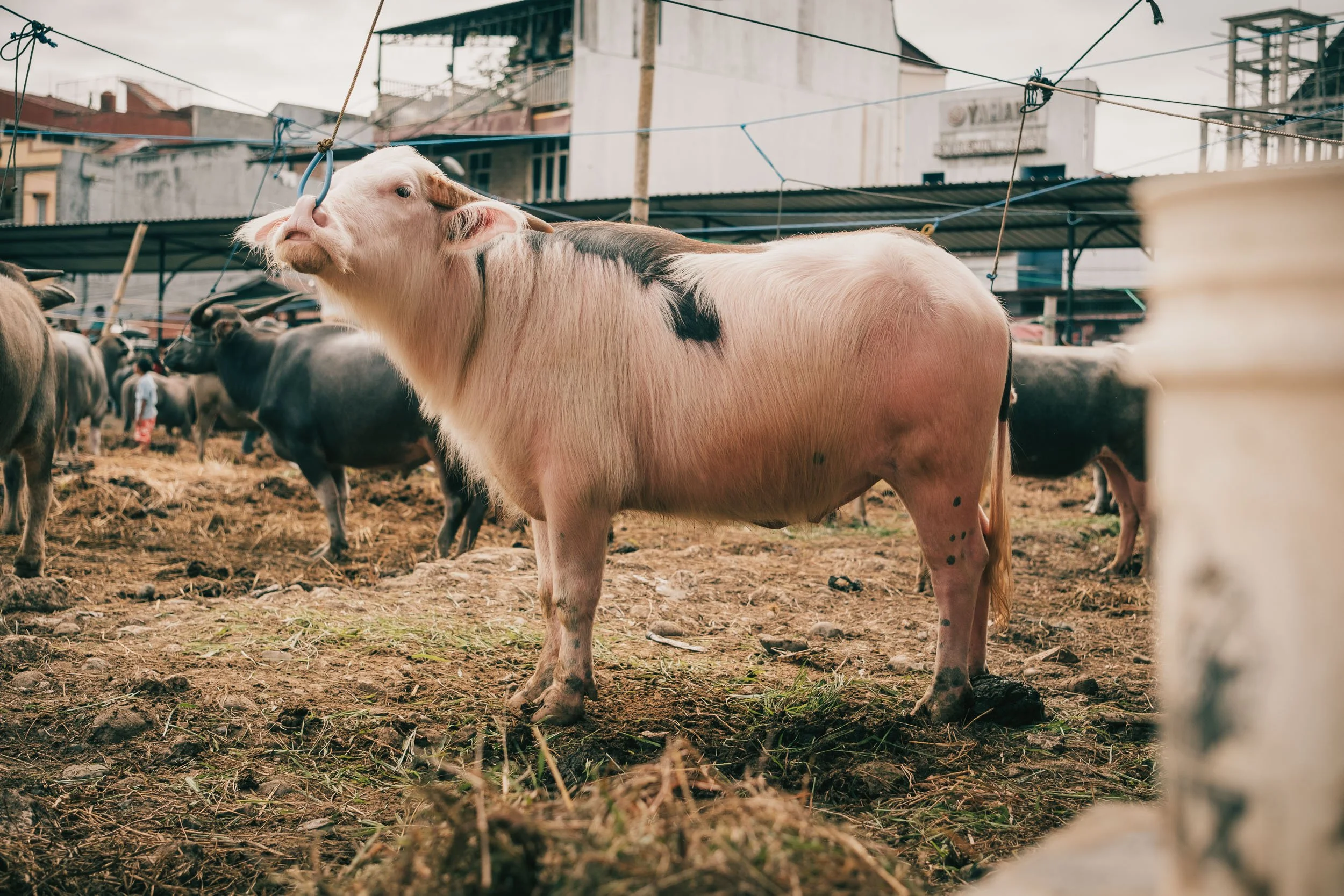
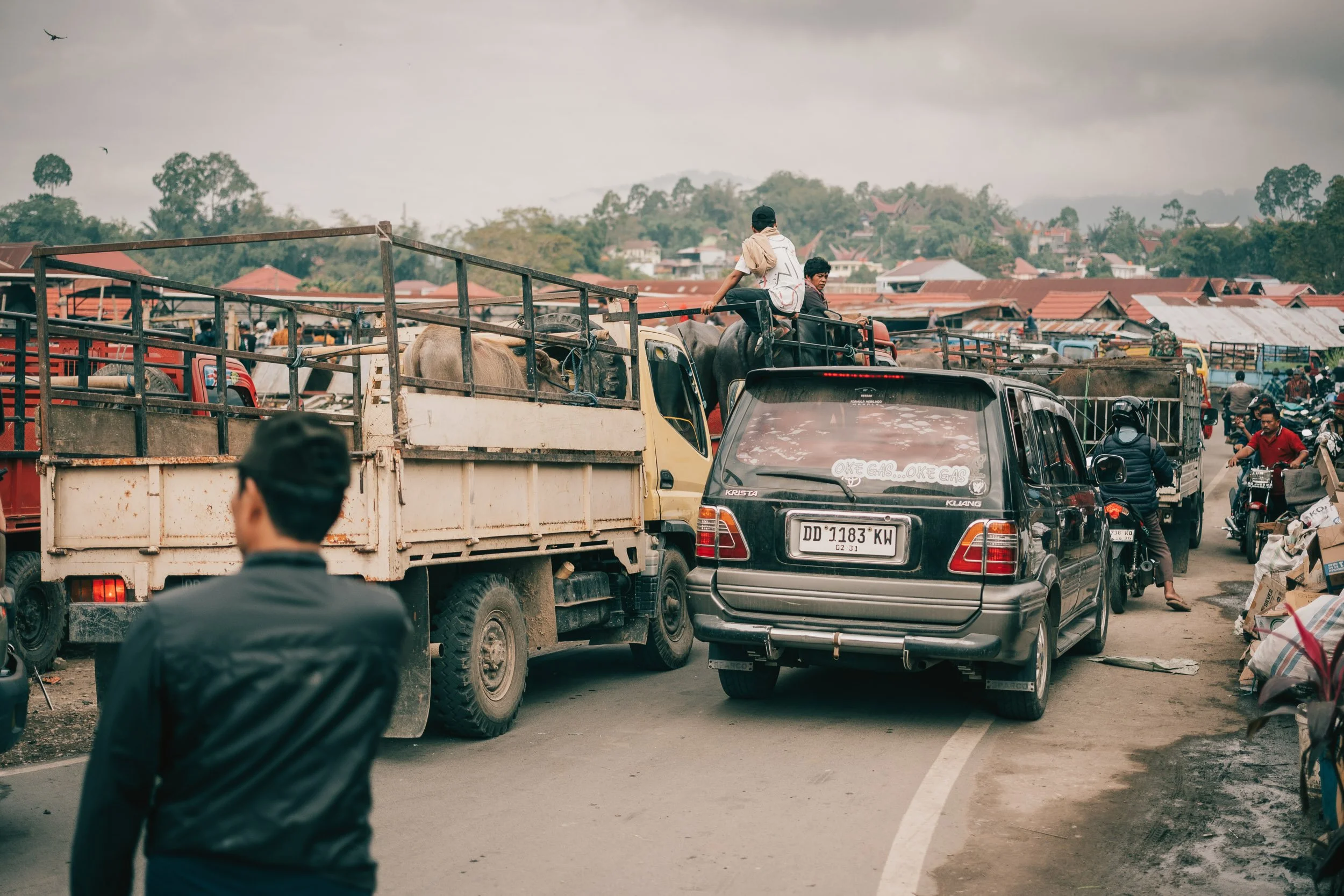
The buffaloes are also one of the main reasons why large Rambu Solo’ ceremonies can become so expensive. At the buffalo market, we saw how carefully the animals were washed, fed and looked after. Their value depends on characteristics such as colouring, markings and the shape of their horns, and particularly rare animals can command extraordinary prices. We heard of buffaloes worth more than 20.000€.
Within Aluk Todolo, these differences carry religious meaning. Meyske explained that particular buffaloes may have specific roles in the deceased’s journey towards Puya, such as carrying the deceased, lighting the way or helping to open the gate into the world beyond.
Day 4: Saying goodbye
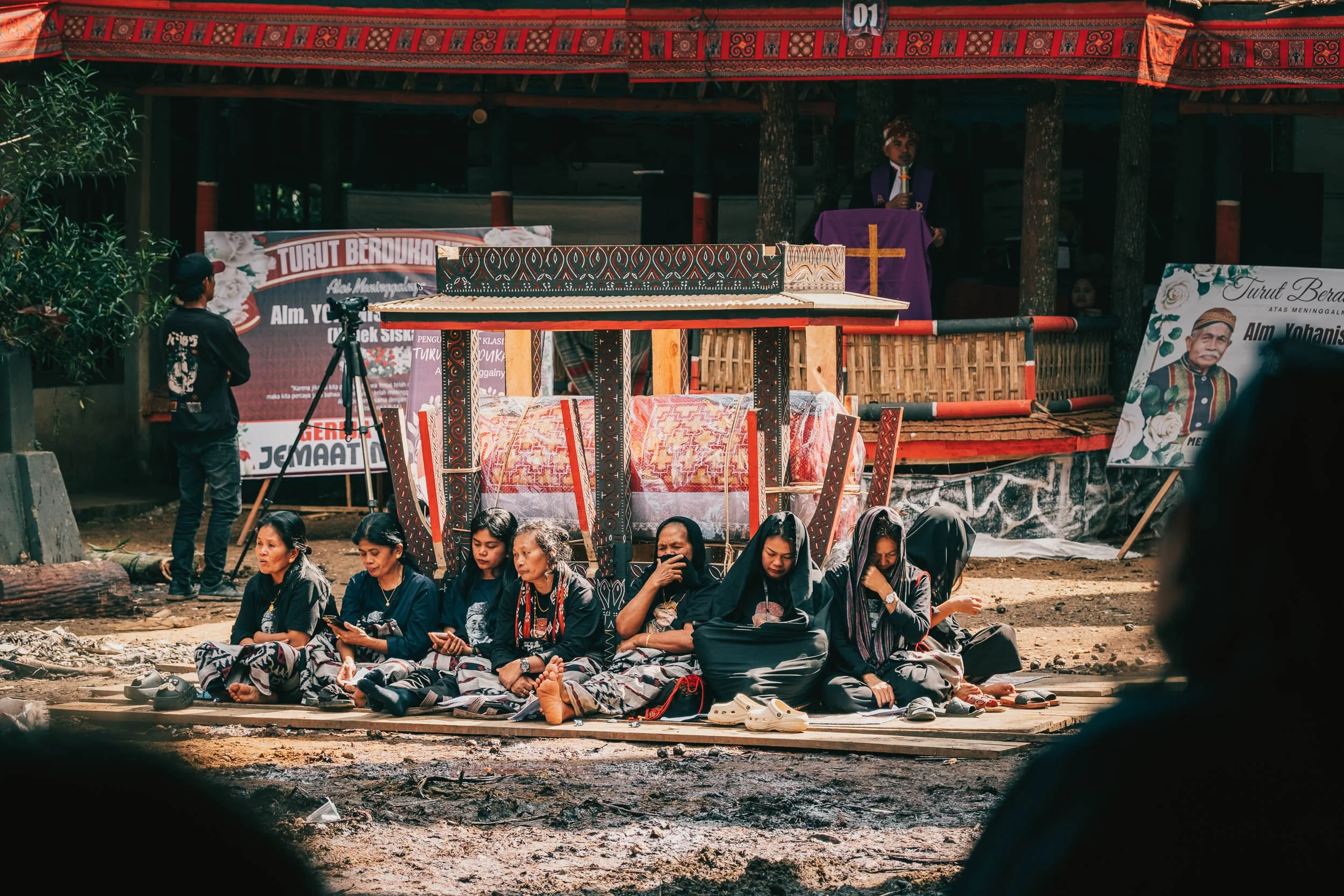
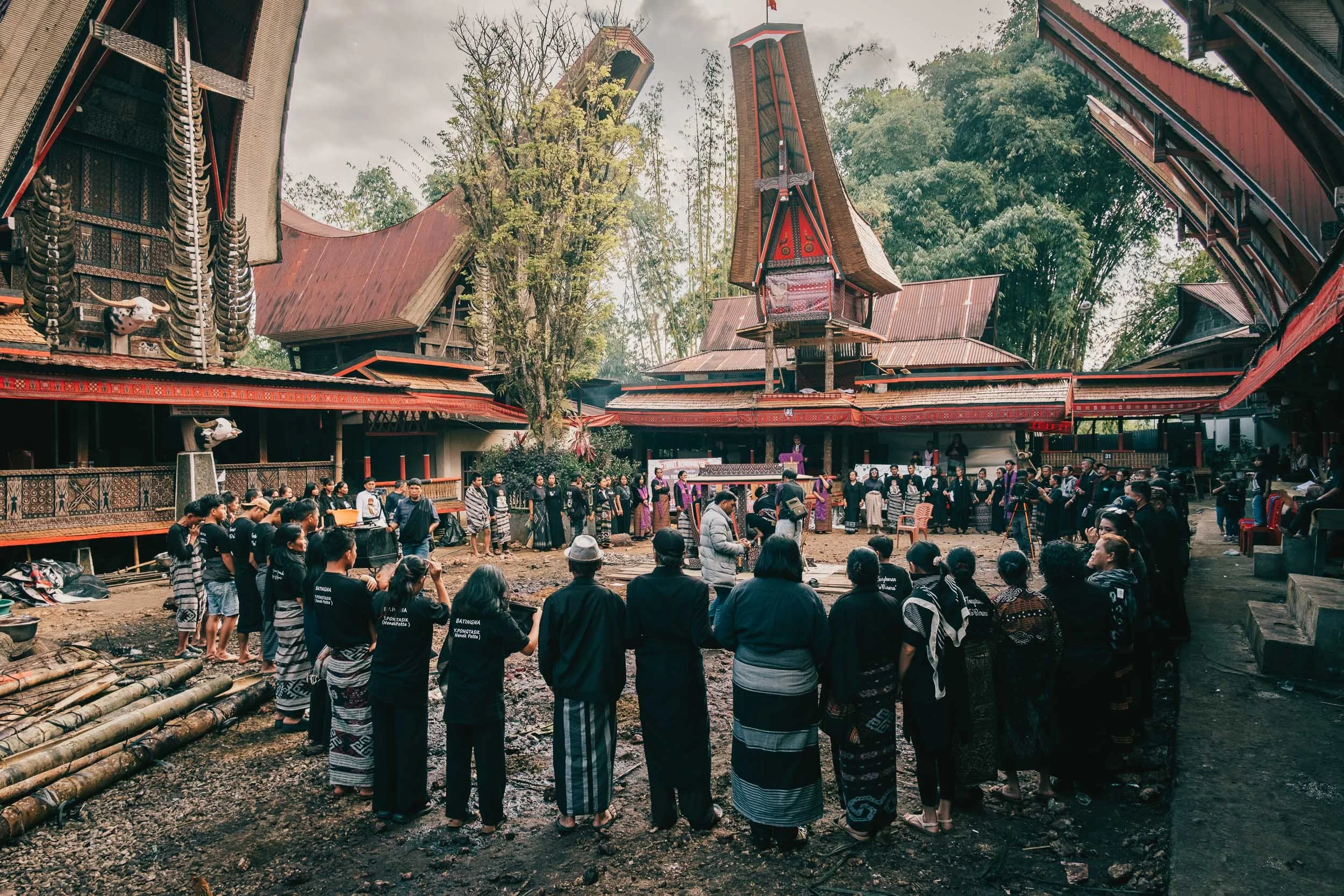
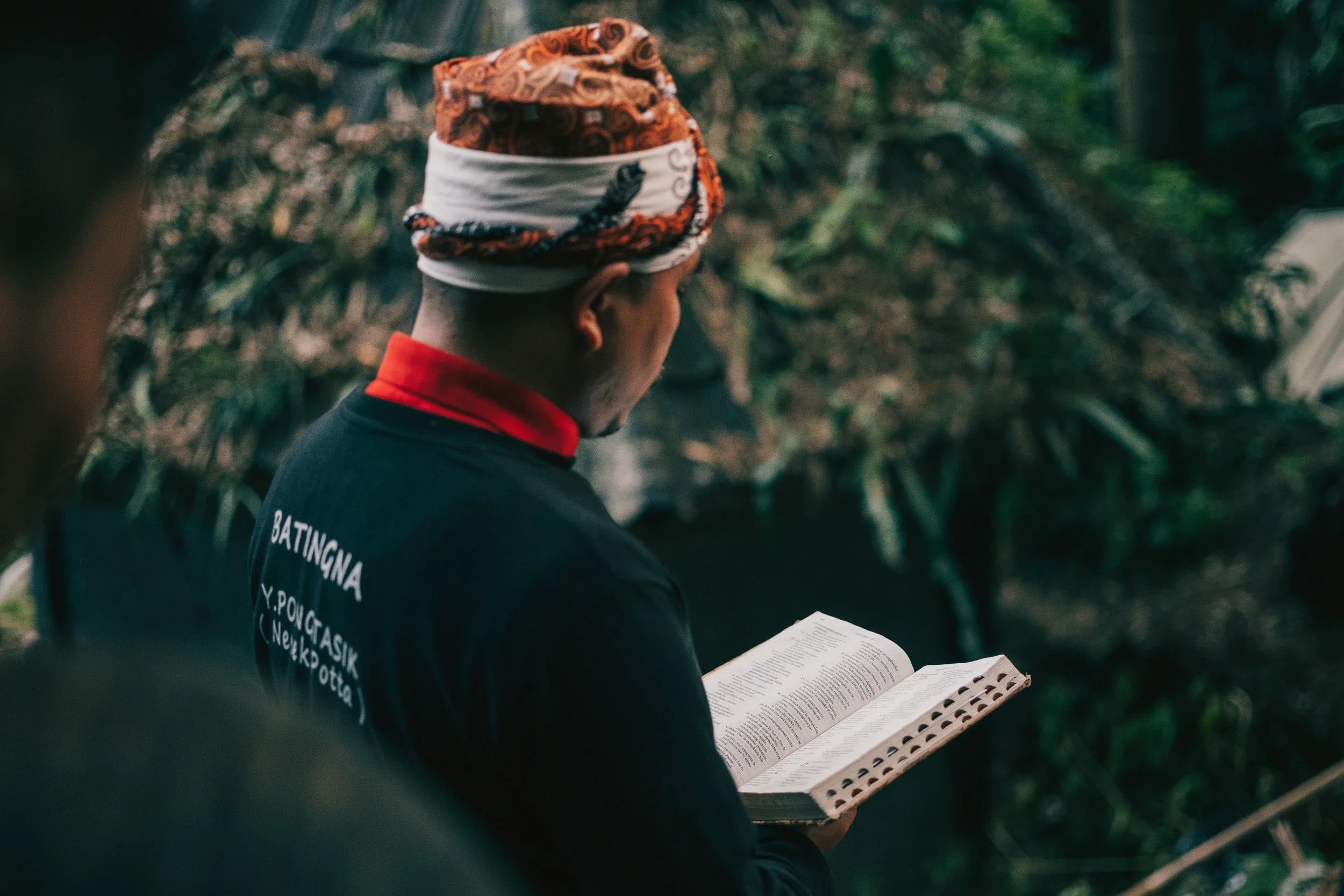
The final stage we witnessed took place far up in the mountains. When we arrived, the atmosphere was noticeably quieter. A Christian minister dressed in purple was preaching, a choir sang, and the closest female relatives sat around the wrapped body of the deceased in deep mourning.
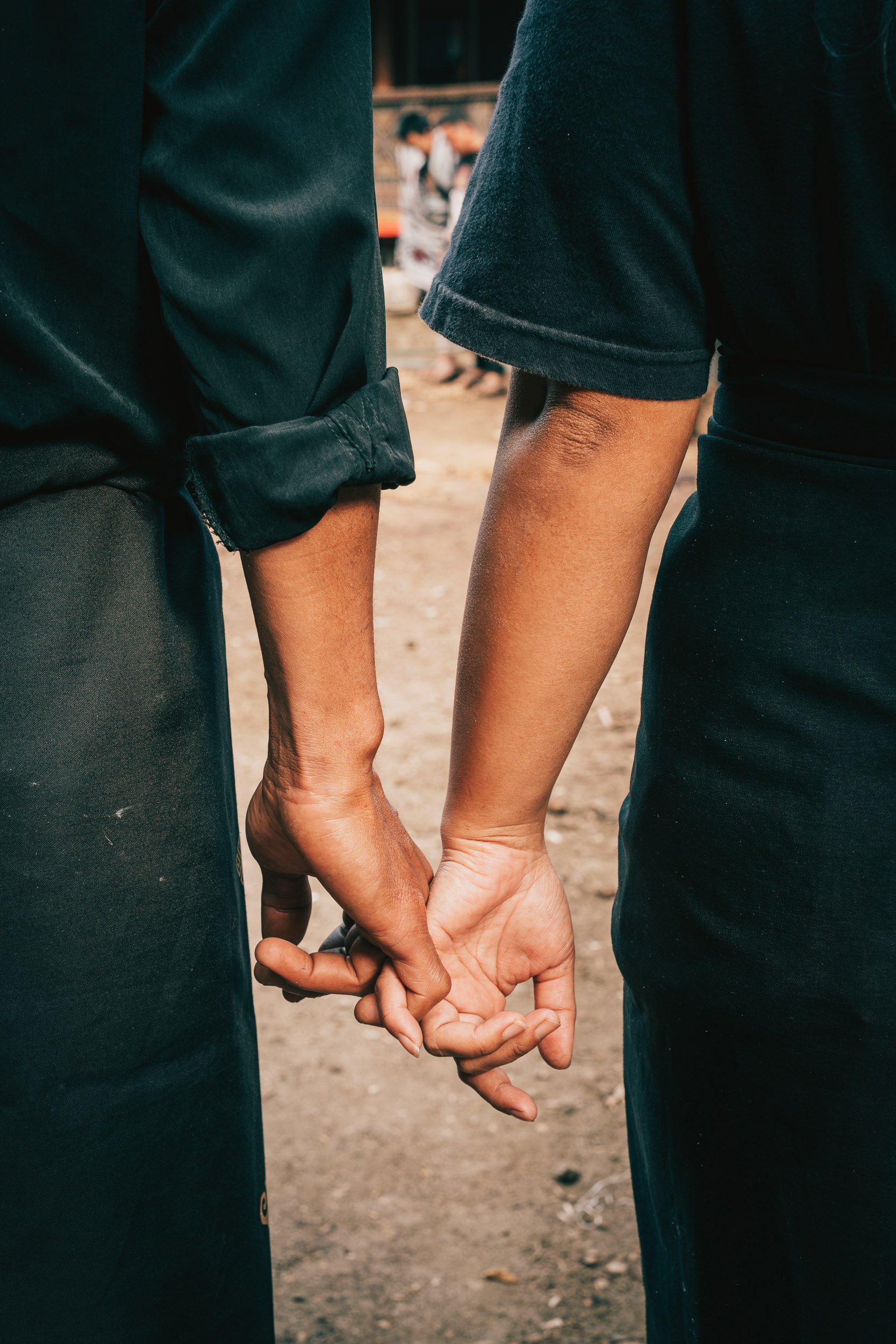
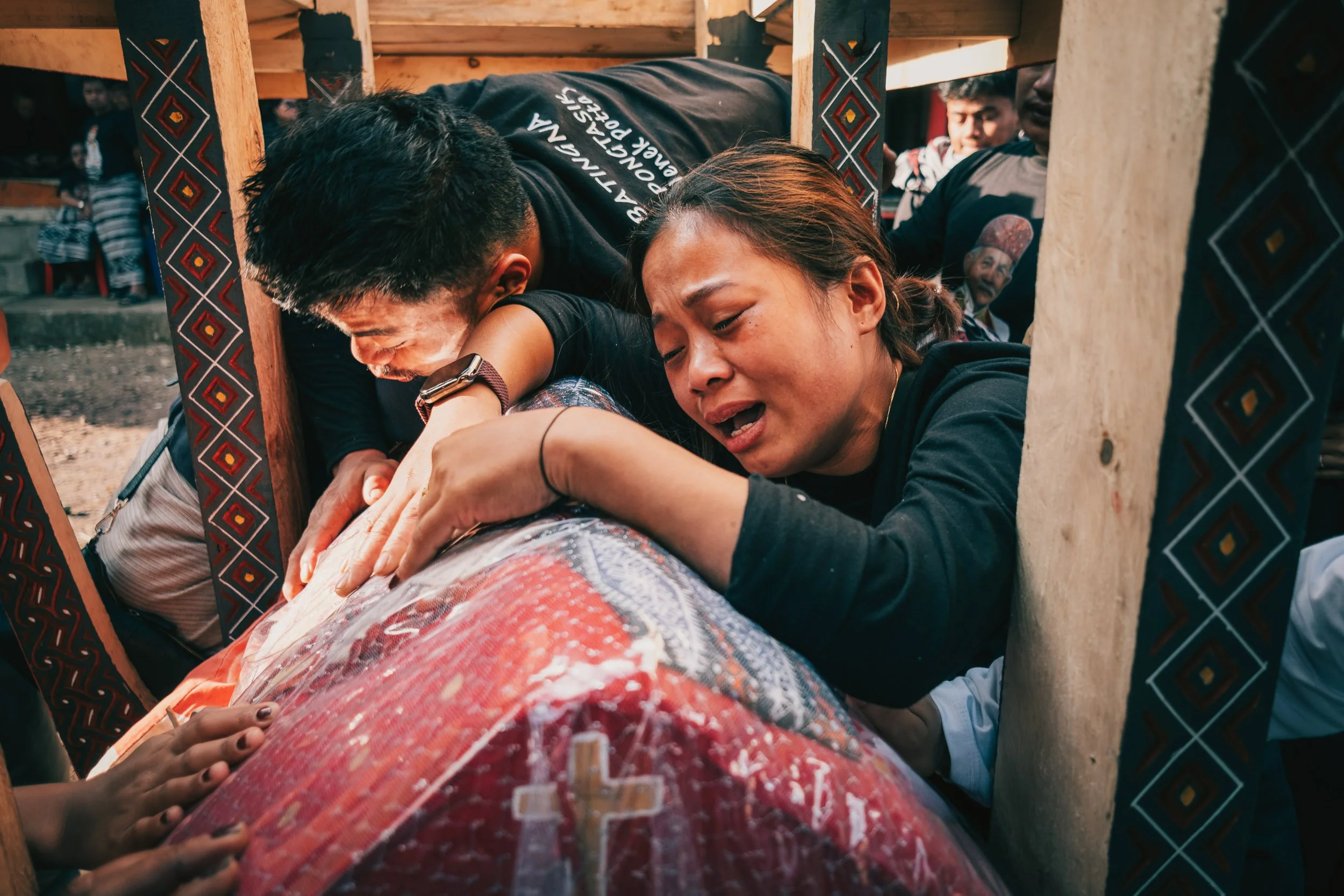
After the service and a shared meal, relatives gathered around the deceased, hooked their pinkies together and sang. One of the grandsons was particularly overwhelmed by grief and eventually leaned over the wrapped body, unable to let his grandfather go. Other grandchildren had described their grandfather as an exceptionally kind man. In that moment, all the unfamiliarity of the ceremonies disappeared. There was simply a family grieving someone they loved. I had to pause.
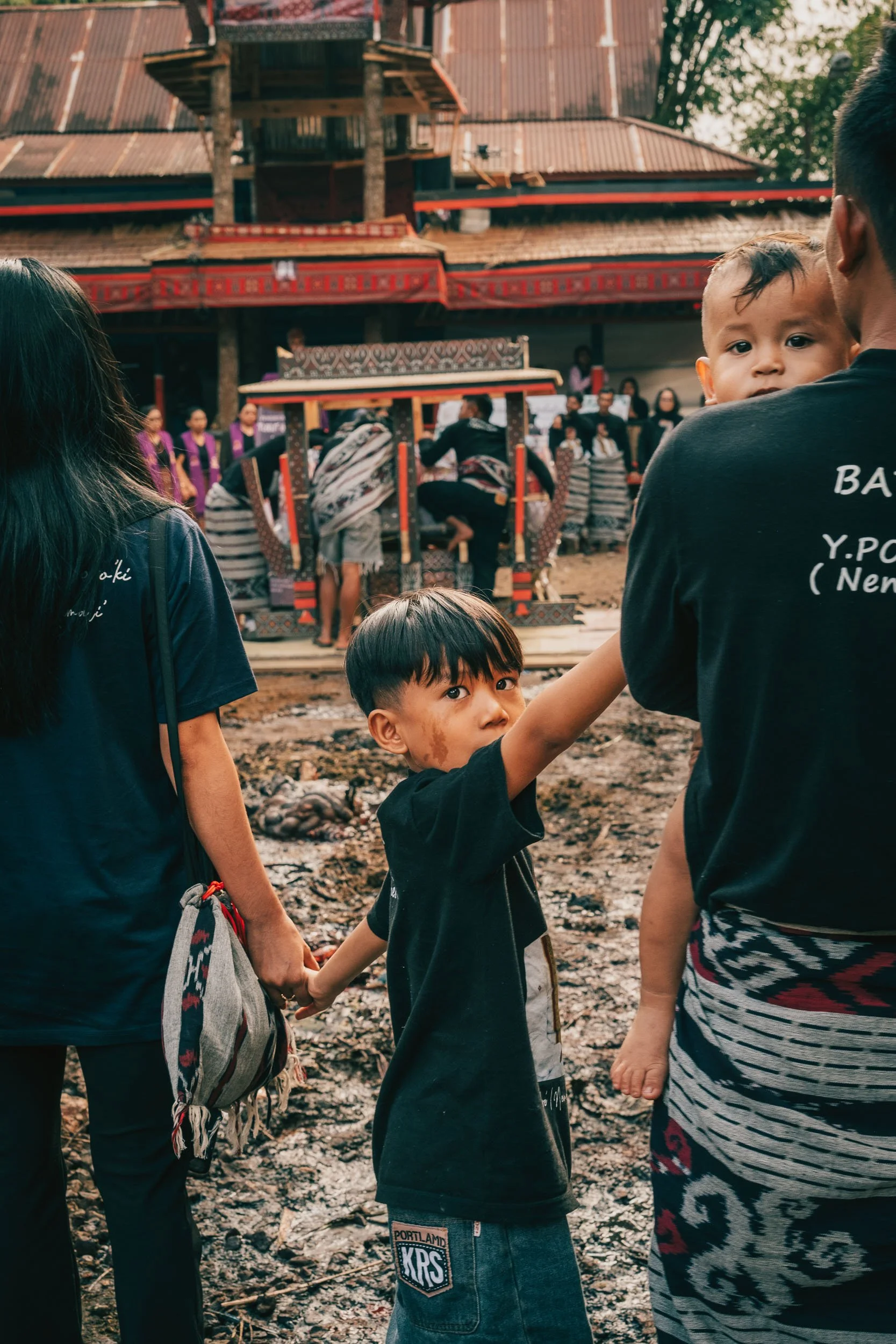
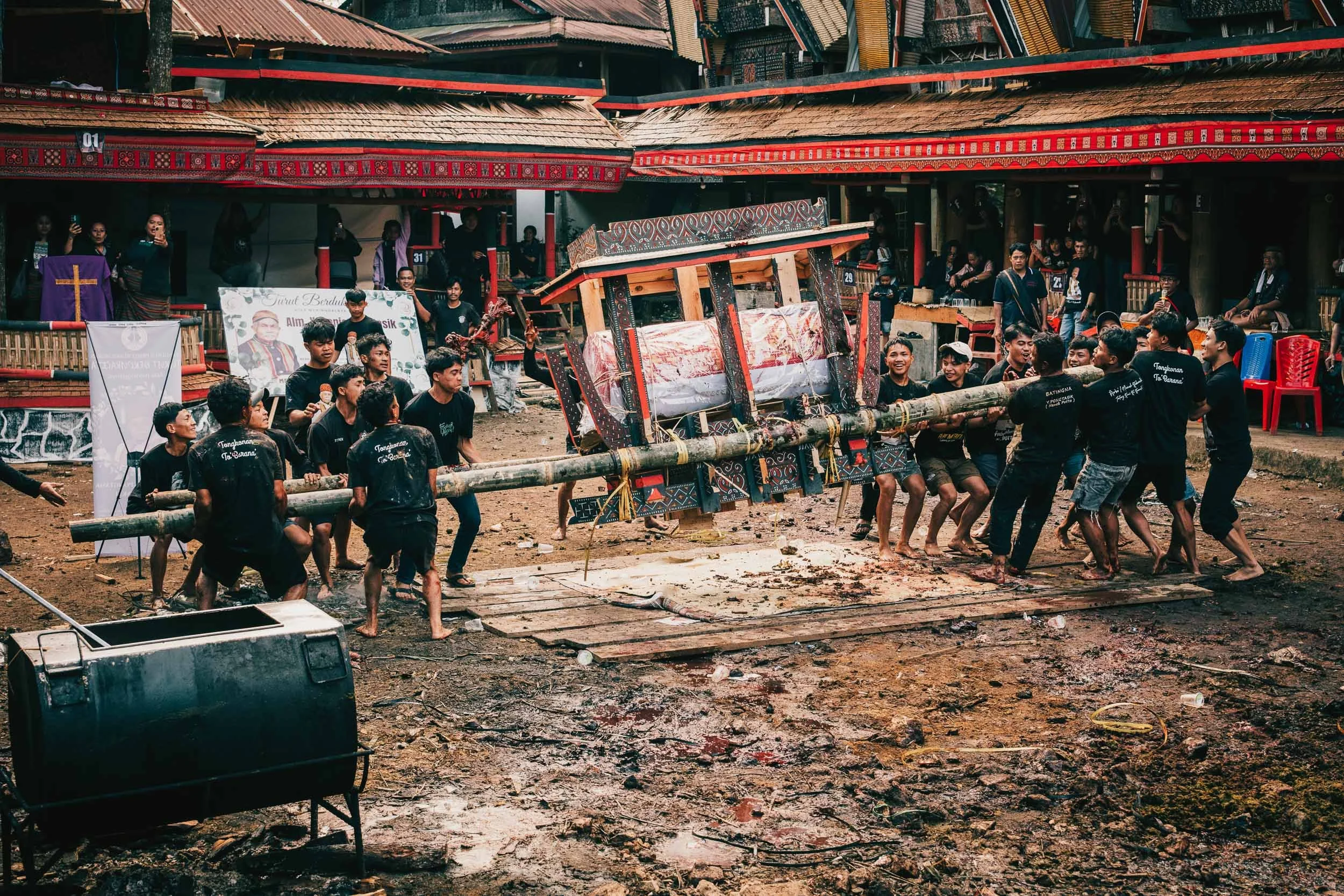
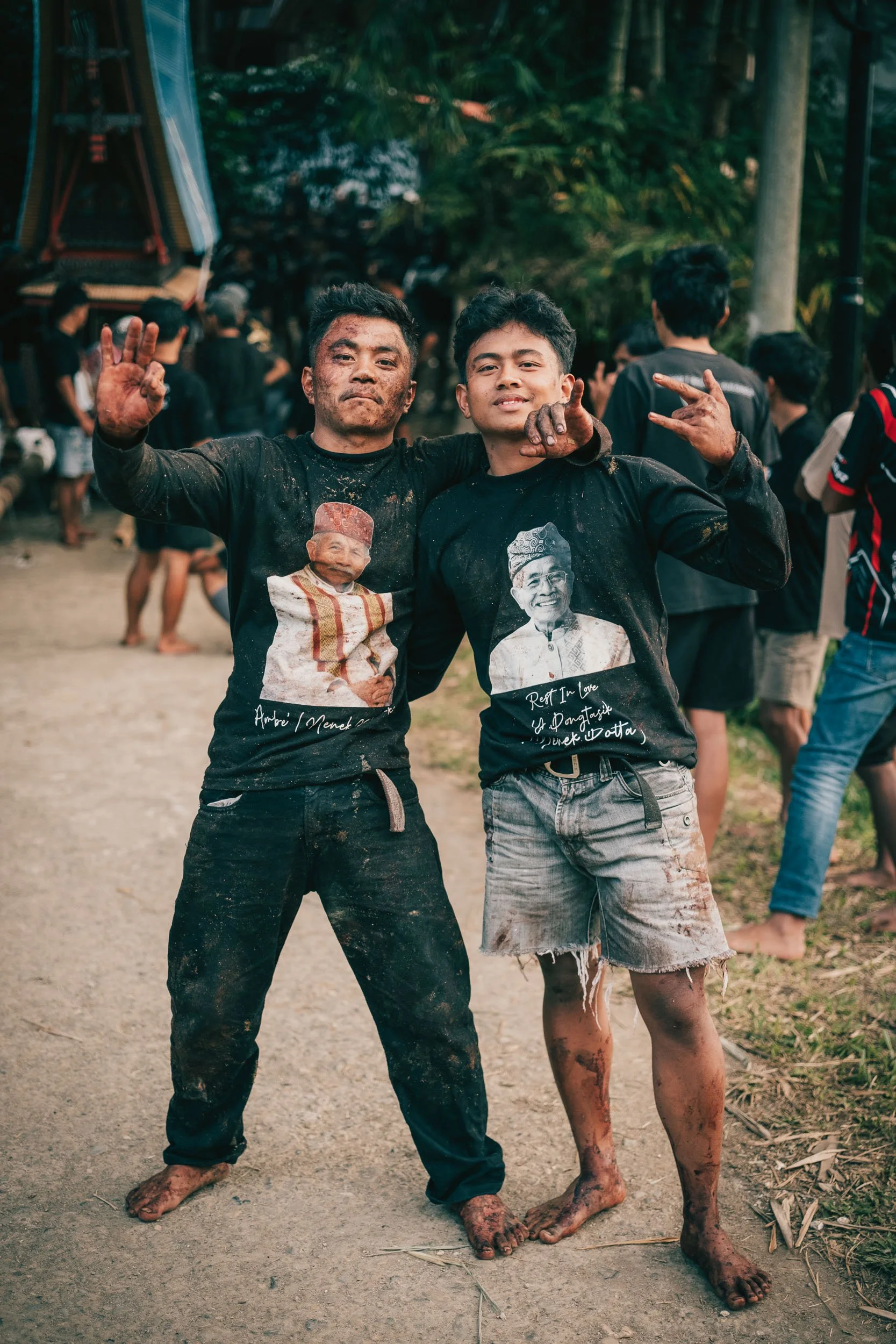
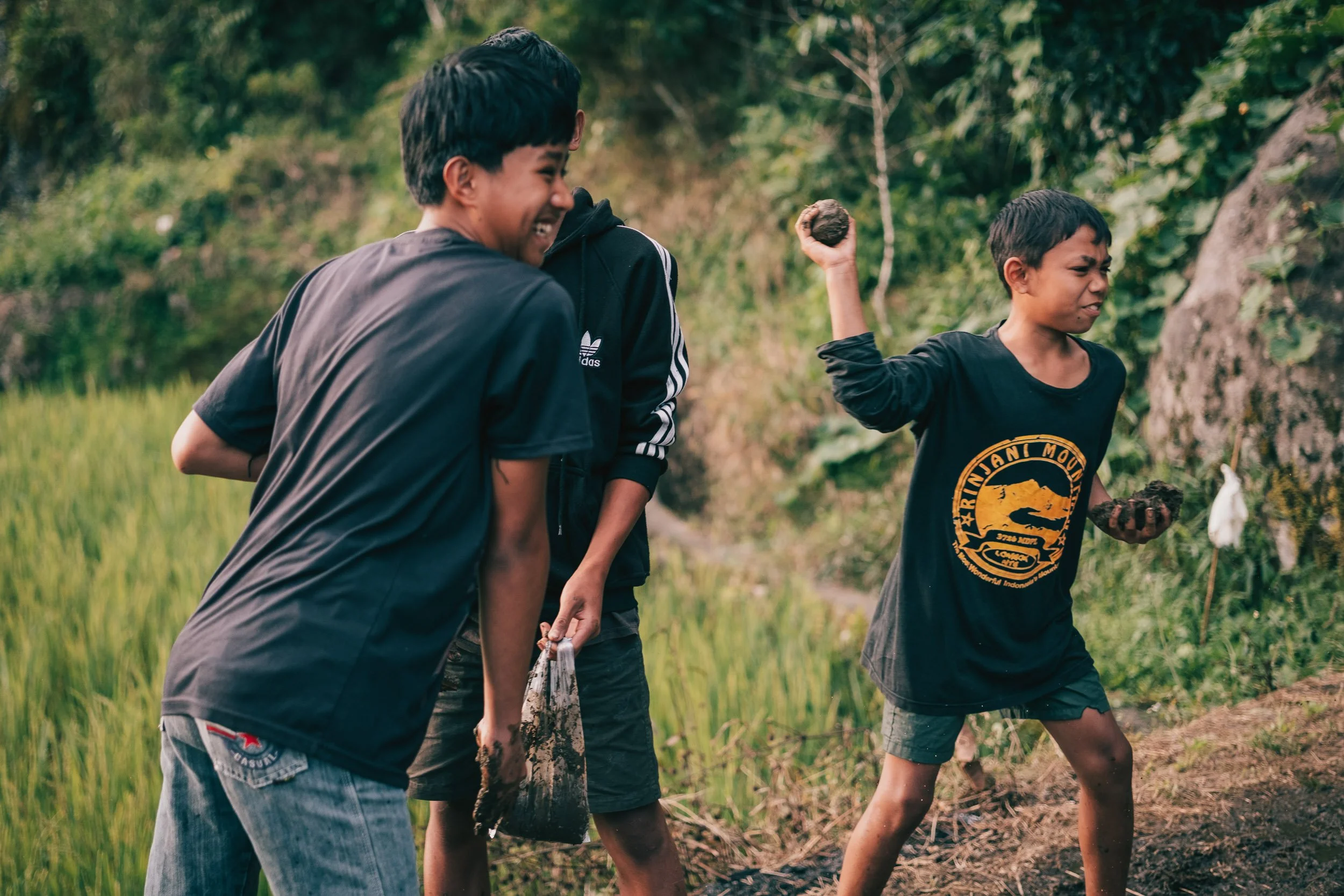
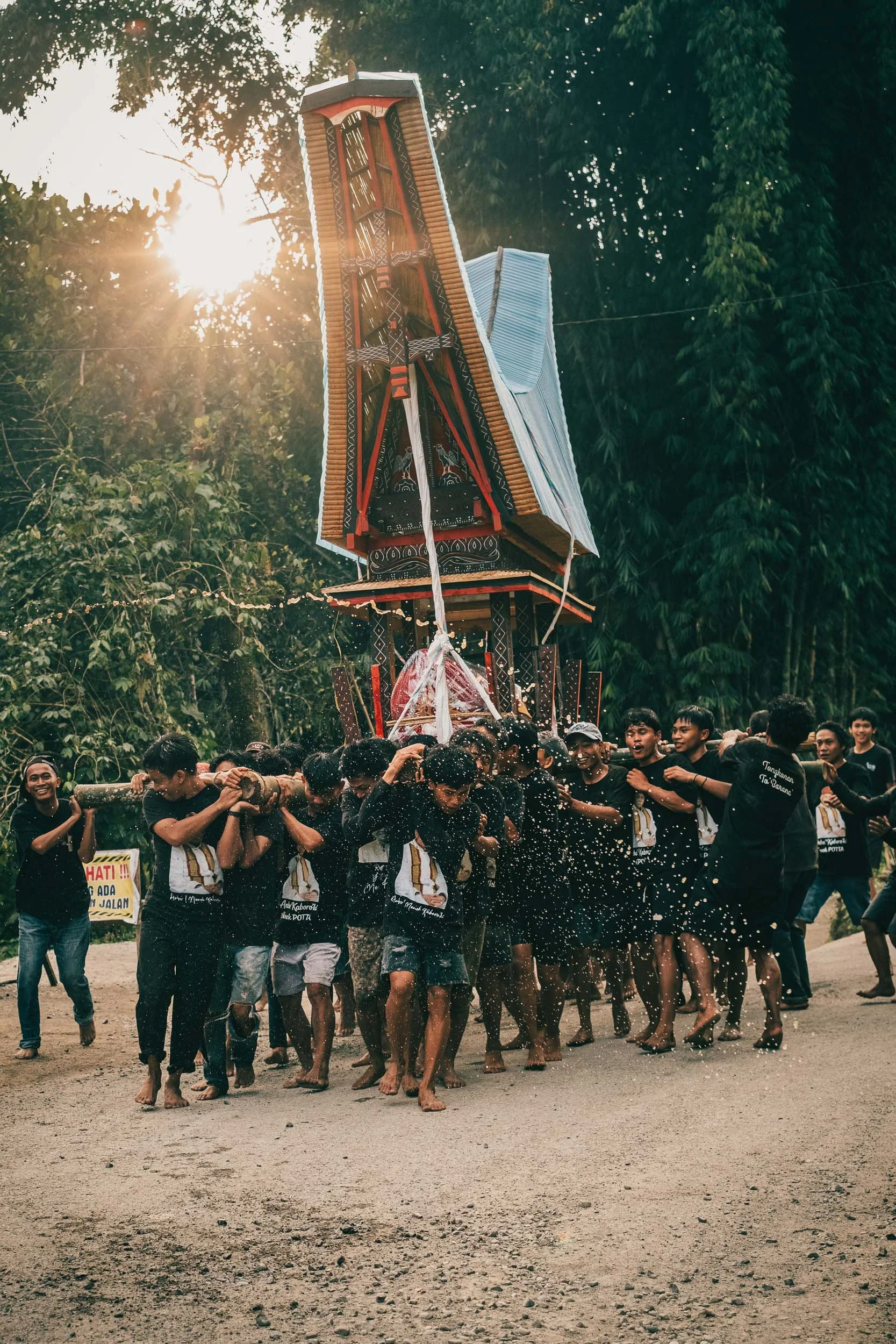
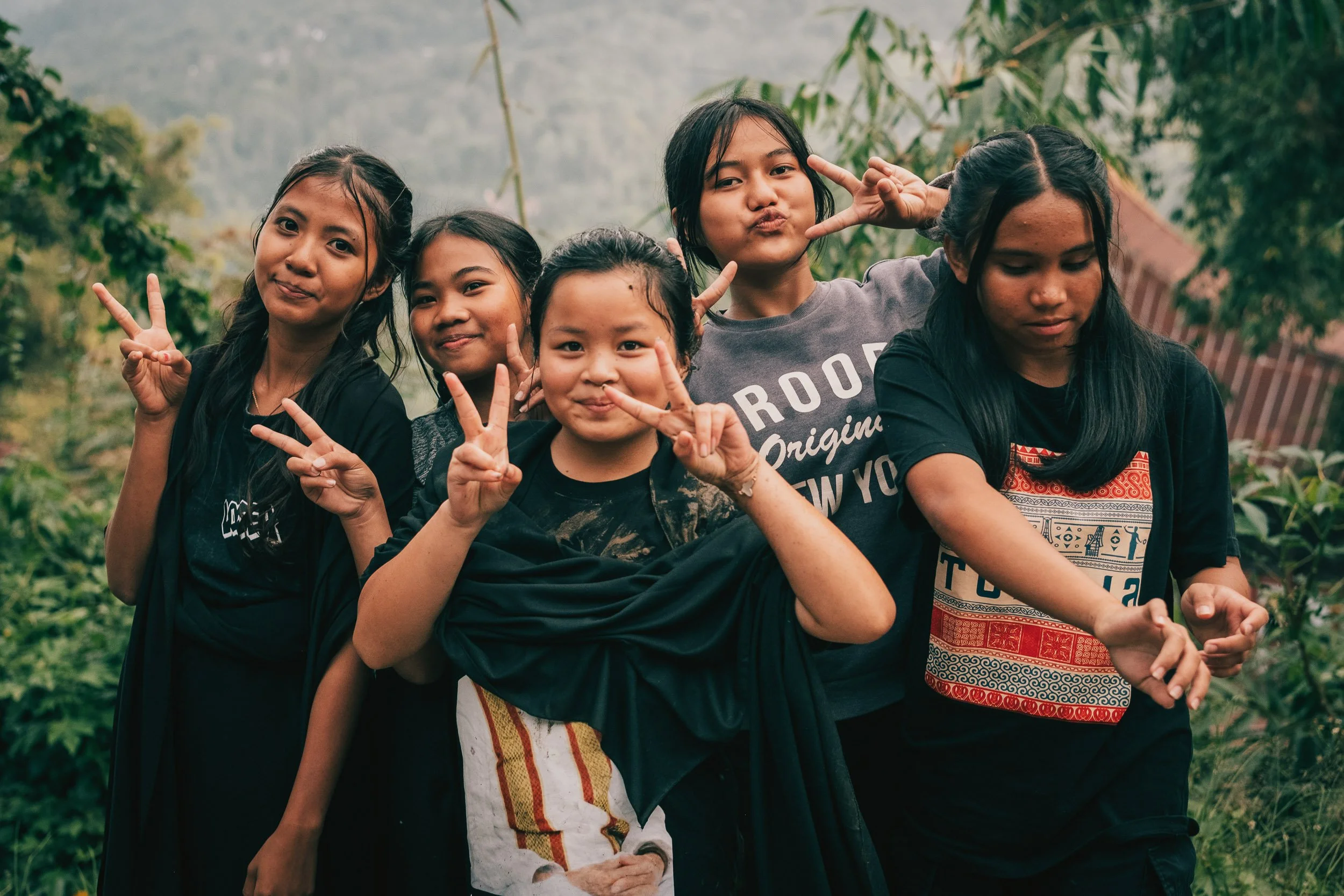
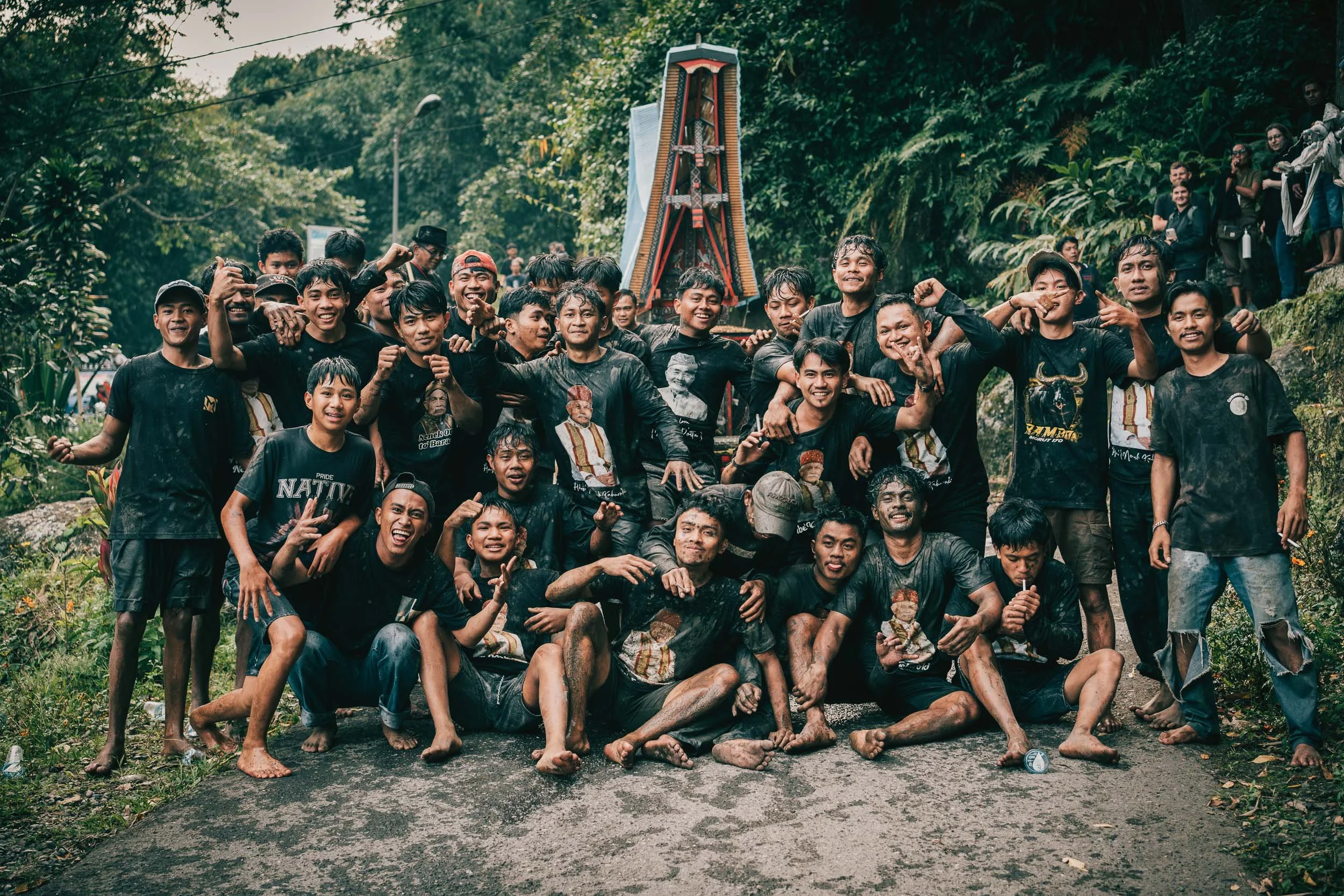
Not long afterwards, the atmosphere changed. As the young men prepared to carry the body to the grave, the gathering became increasingly playful. Family members wore T-shirts printed with their grandfather’s face, people laughed, and once the procession left the village, young men and women began throwing water and mud at one another. Residents along the mountain road joined in with buckets and water pistols.
The grave was located roughly two kilometres away. By the time the procession reached it, the quiet grief of the morning had turned into a lively communal walk through the mountains. Yet it did not feel as though one emotion had replaced the other. Sadness and joy simply belonged to the same goodbye.
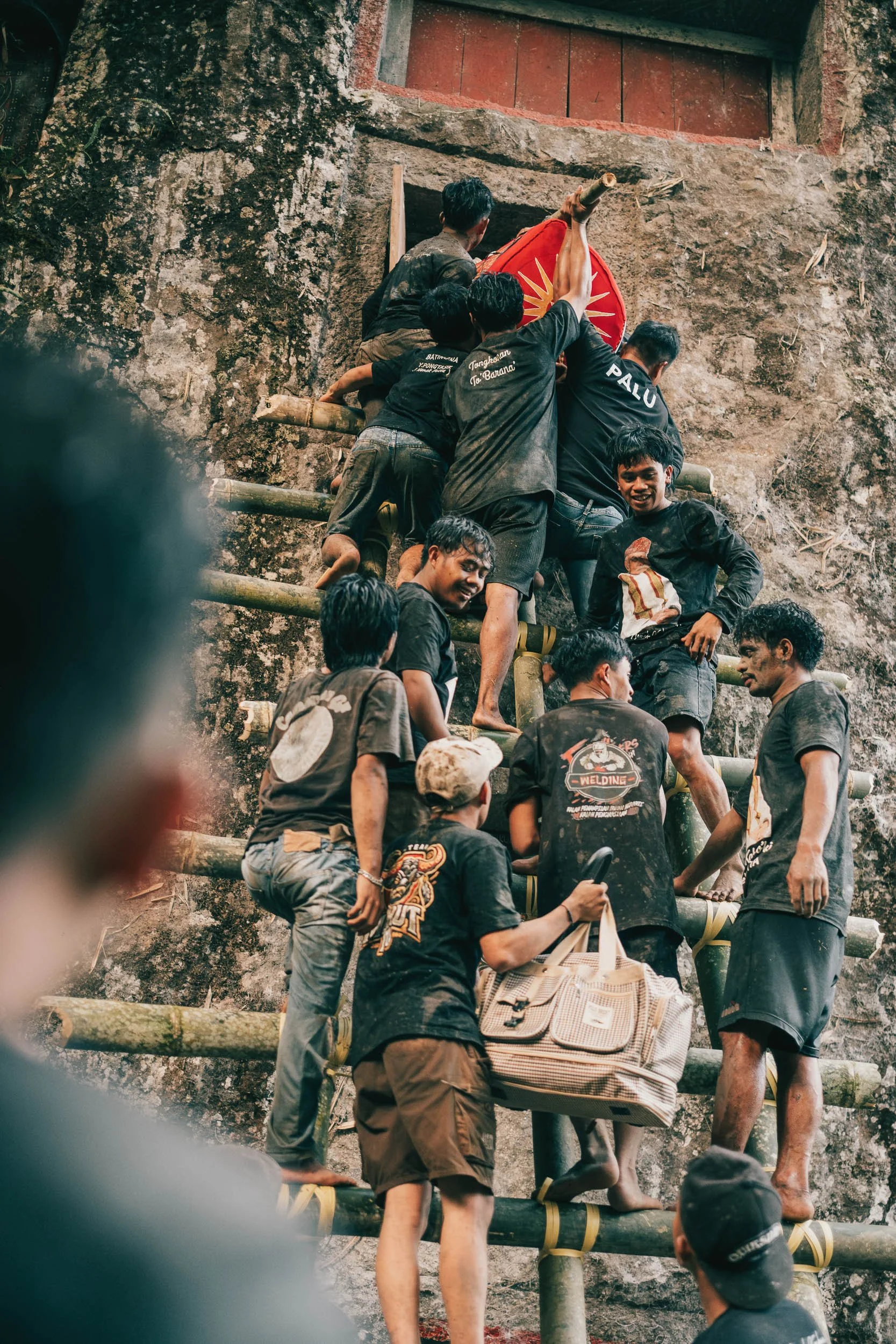
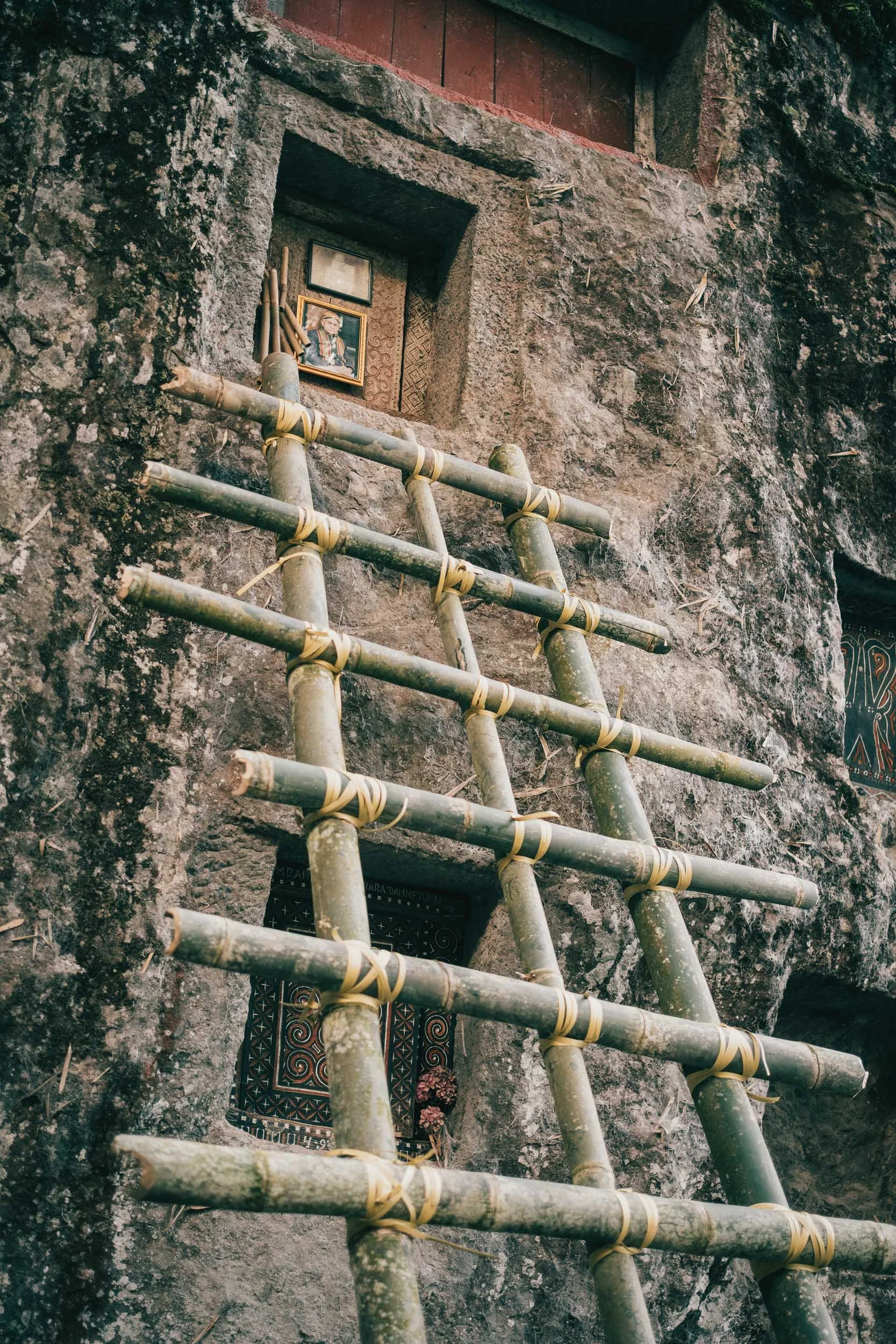
At the grave, a bamboo ladder was placed against the rock and the wrapped body was carried into the stone chamber. Some of the grandfather’s personal belongings were placed inside with him before the burial was completed.
After the ceremonies, and after the much longer period during which the deceased had remained within the family’s everyday life, the transition was finally complete.
Traditions that change without disappearing
One thing continued to fascinate me throughout these days. Most Toraja today are Christian, yet many practices rooted in Aluk Todolo remain central to Rambu Solo’. Christian ministers and choirs participate in the ceremonies, while older ideas about Puya and the role of buffaloes remain present. Rather than one belief system simply replacing another, old and new practices have become intertwined.
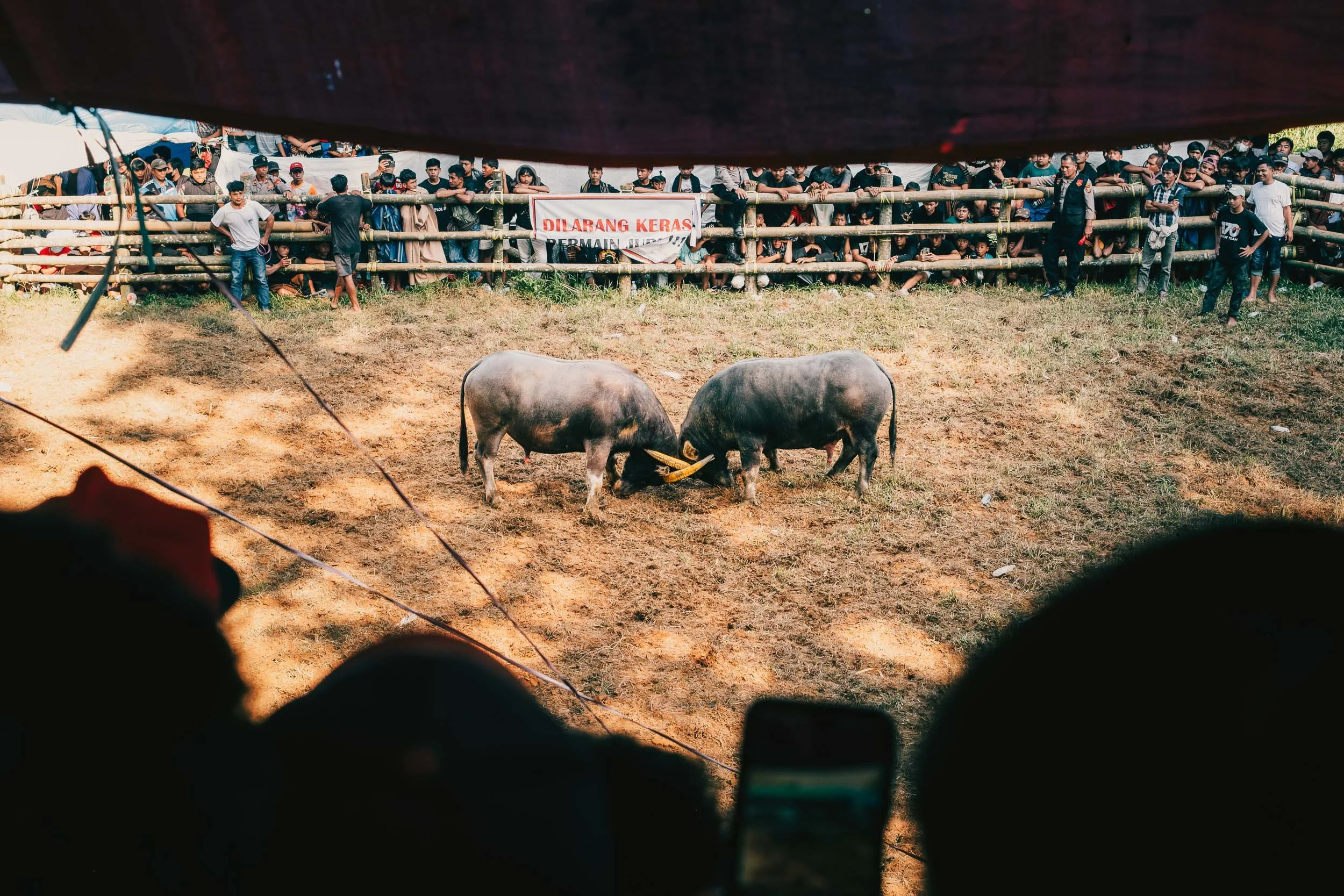
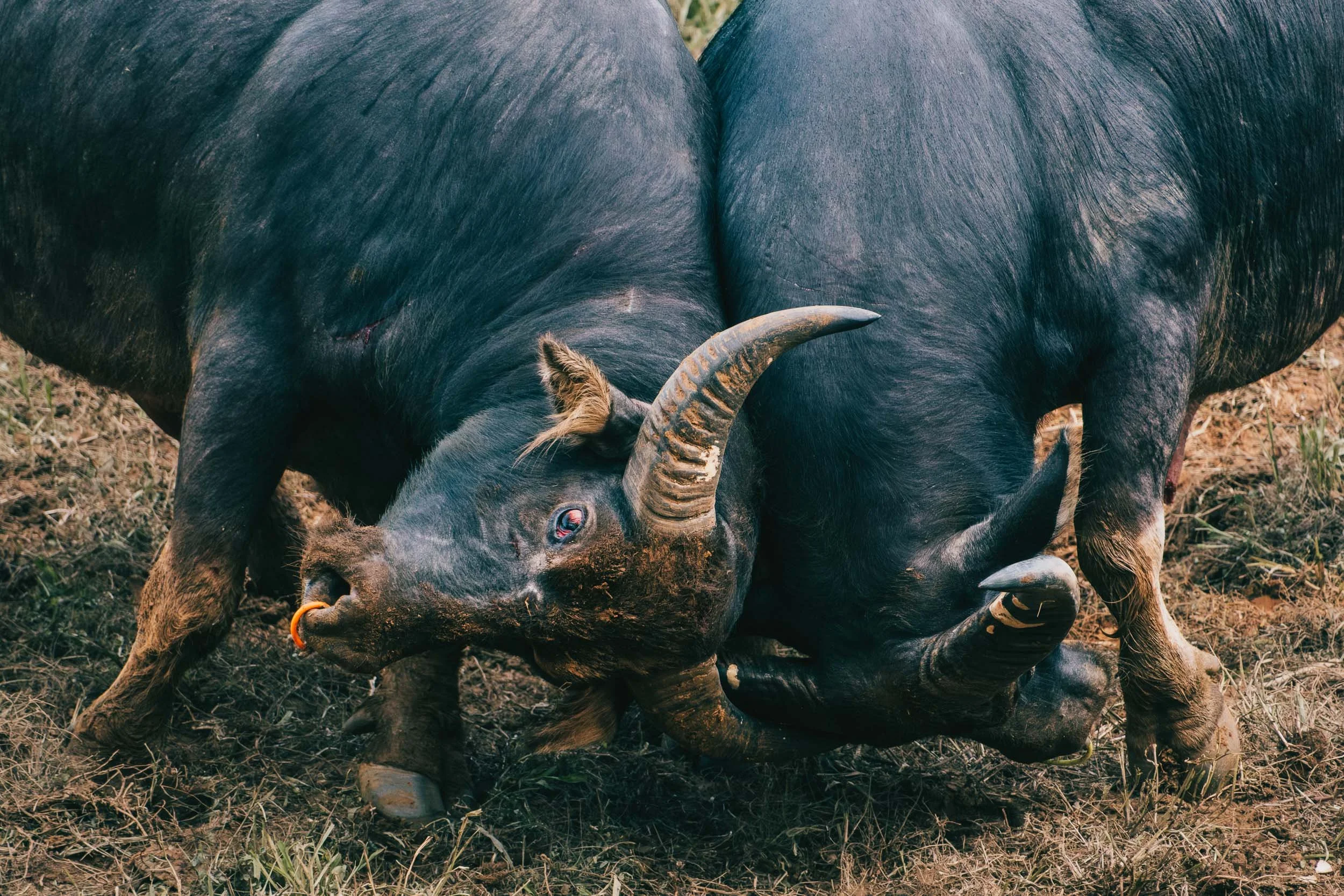
In my academic work, we call this institutional layering: new practices are added to existing ones rather than simply replacing them, creating coexistence but also tension. The traditional buffalo fights are a good example. Ma’pasilaga Tedong remains connected to large funeral ceremonies and can draw huge crowds, but the gambling surrounding the fights conflicts with both Christian norms and Indonesian law.
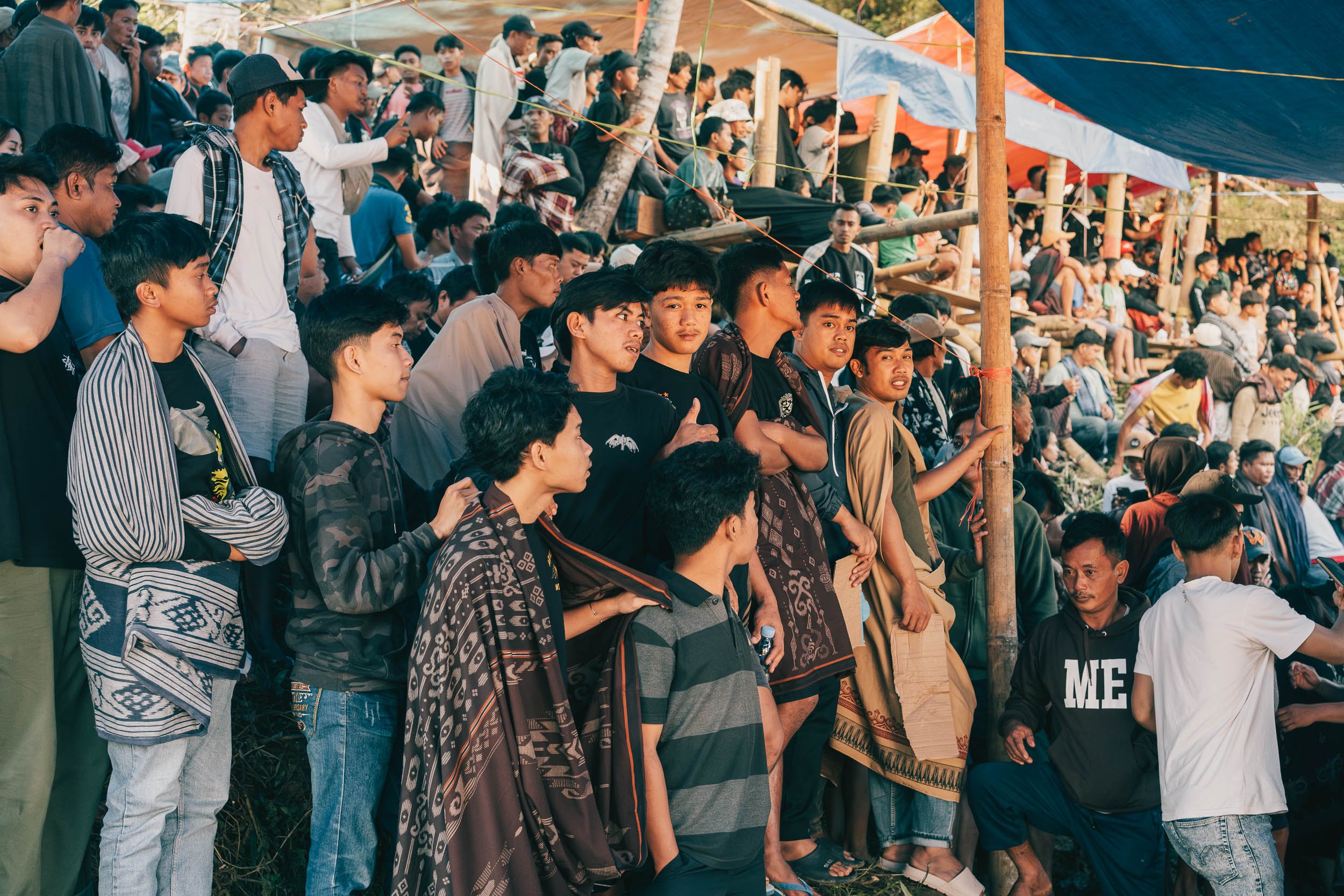
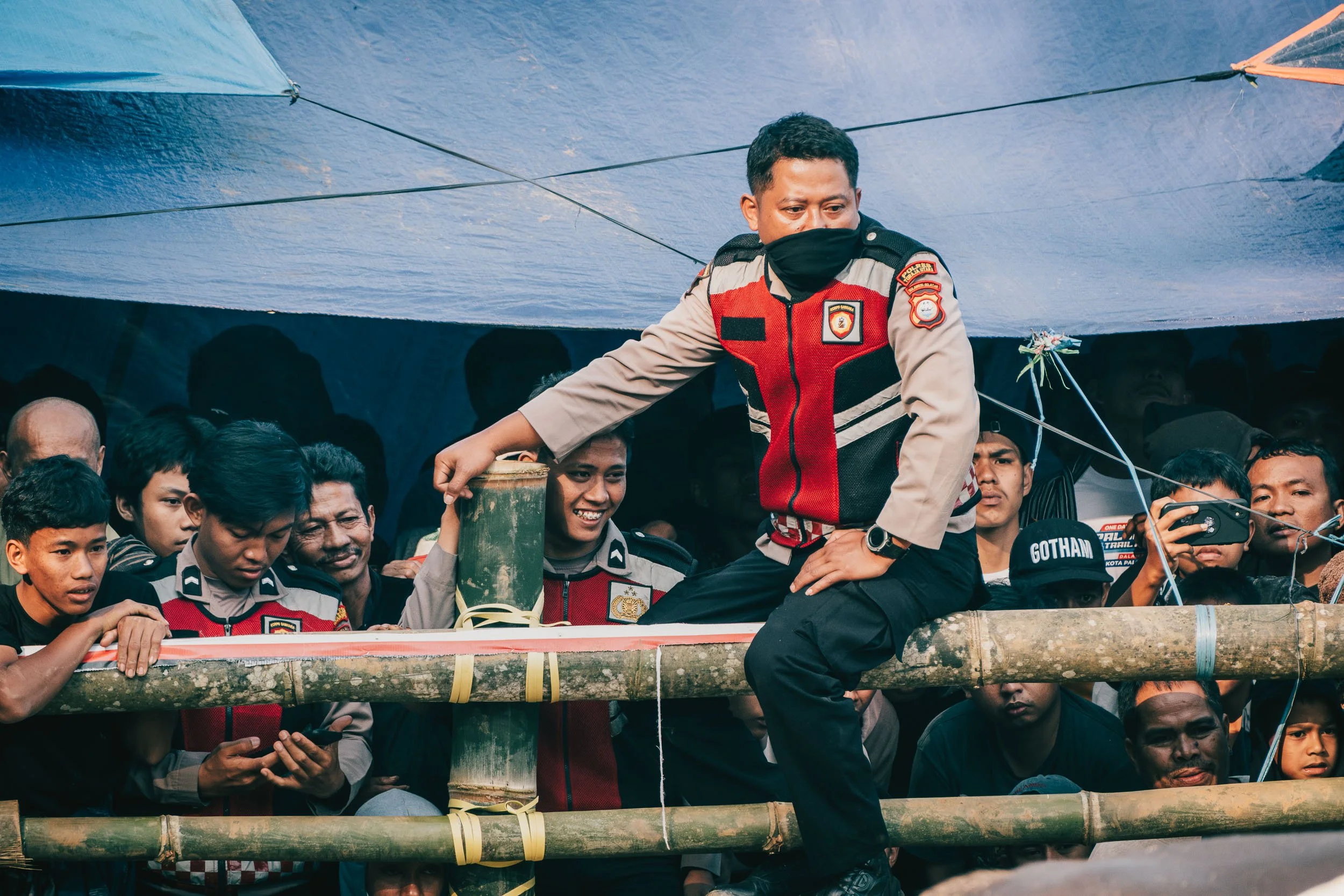
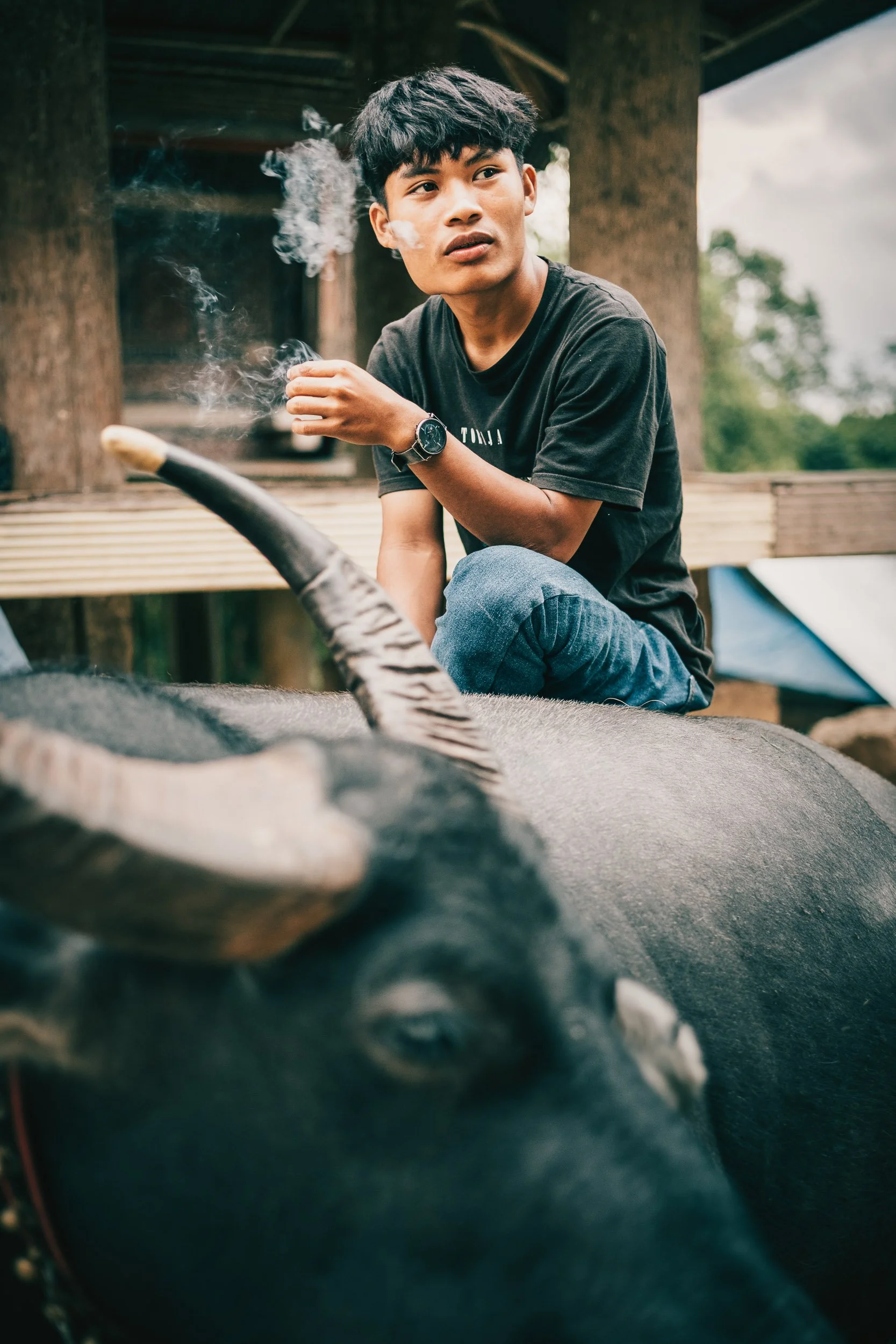
What keeps these traditions alive are the people who practice and pass them on. Some know the ceremonial protocol, others prepare food, contribute animals or know how meat should be distributed between families. Younger generations grow up taking part. Meyske plays her own role by making these traditions accessible to visitors from around the world, while ensuring they are approached with respect. That outside interest can also reinforce their value within the community itself.
What initially seemed unfamiliar gradually revealed how much work it takes to keep traditions meaningful as society changes around them. At its core, however, Rambu Solo’ remains about something remarkably familiar: coming together as a family and finding a way to say goodbye.
In the end, it is about being there when someone has to say goodbye.